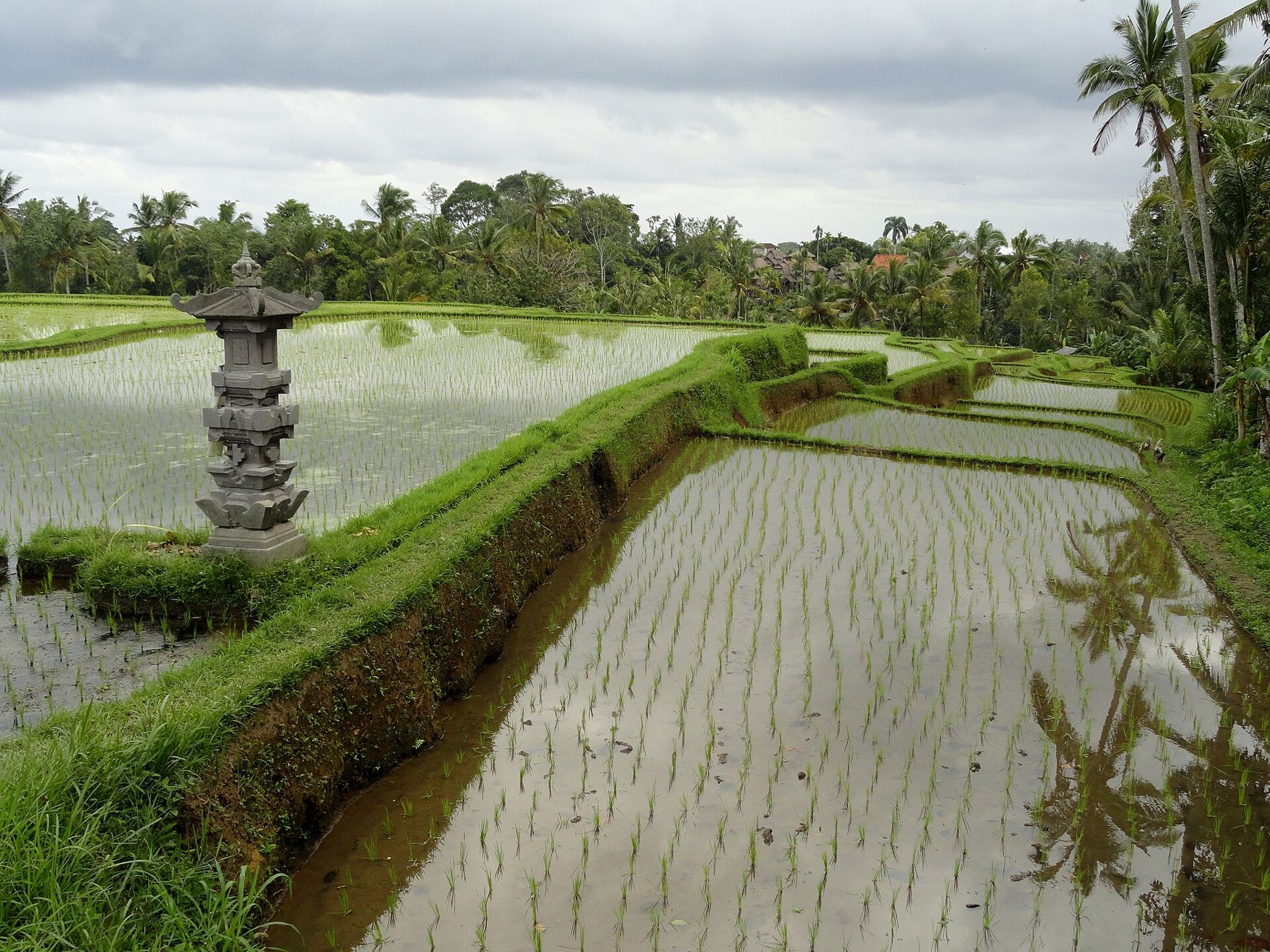
Ubud, in the hills of Gianyar north of the south coast, has been a centre of Balinese art, music and dance for generations. In recent decades it has also become one of the world's best-known places to practise yoga, with classes in every style and visitors who come for a week and stay for a season.
It is easy to be swept up in the busy side of that scene: packed timetables, workshops, retreats and cafes full of people talking about their practice. The quieter way is to do less, more slowly, and to let the town's older rhythms of temple, field and river set the pace.
Yoga in a Balinese setting
Most of the yoga taught in Ubud follows international styles that came from India by way of the wider world: hatha, vinyasa, yin, restorative and others. Balinese Hinduism has its own spiritual practices of prayer, offering, meditation and ceremony, and they are distinct from the classes you will find in town. It is worth knowing the difference, and not assuming that a yoga class is a window into local religion.
That said, the setting matters. Many classes take place in open-sided pavilions looking over rice fields or river valleys, and the sounds of the morning, cockerels, water and gamelan practice drifting from a village, become part of the practice.
Choosing a class or a teacher
There are many places to practise, from large studios with full timetables to small groups in a teacher's garden. Instead of chasing a name, think about what you need:
- Ask about the teacher's training and experience, and whether classes suit your level.
- Try a drop-in class or two before committing to a longer course.
- Tell the teacher about any injuries before you start.
- Choose smaller classes if you want attention and adjustments.
- In the heat, choose gentler practice than you would at home, and drink plenty of water.
Be cautious with anything that promises dramatic healing or charges large sums for secret knowledge. A good teacher is usually modest about what yoga can do.
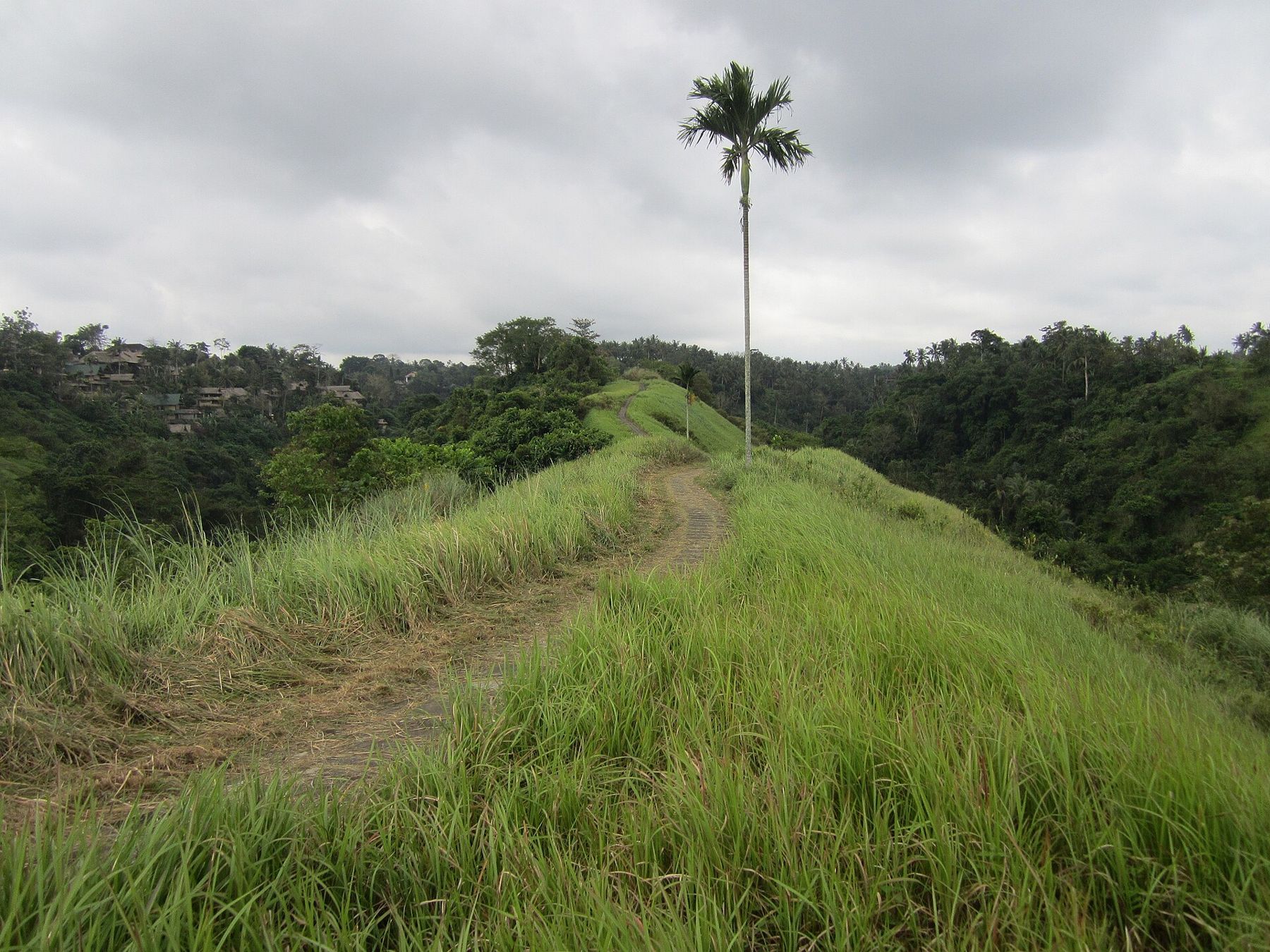
The Campuhan Ridge at first light
The Campuhan Ridge walk begins on the edge of Ubud, near the temple of Pura Gunung Lebah, at the point where two rivers meet; campuhan means a meeting of waters. From there a paved path climbs onto a narrow ridge between the two river valleys and runs north through tall grass, with forest and palms falling away on either side, towards the village of Bangkiang Sidem.
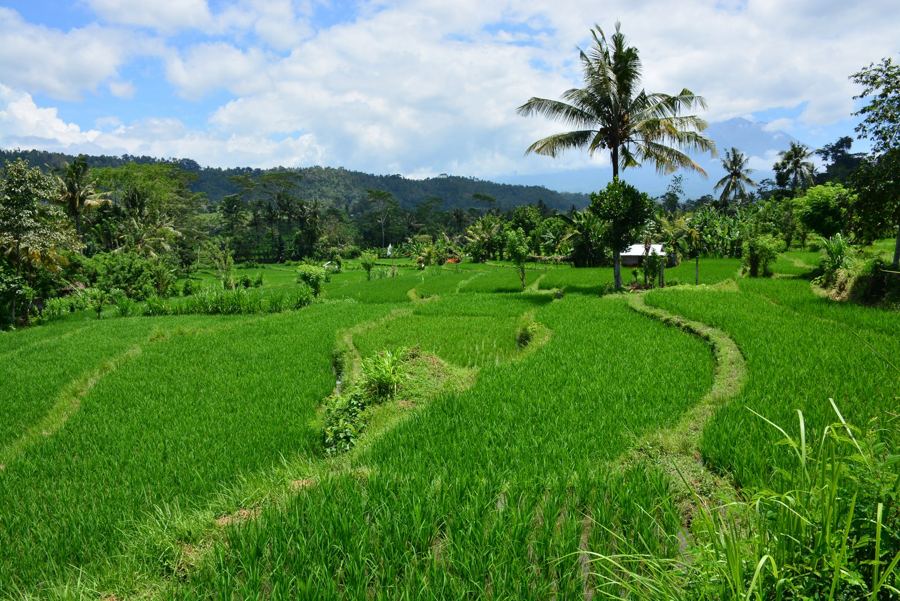 Another courseSidemen, the valley that stayed slow
Go at sunrise. The path has almost no shade, and by mid morning it is hot and busier. At dawn the valleys are full of mist, birds are calling, and the light comes low across the grass. Walk slowly. It is a gentle path, and the point is the walking, not the destination.
Some people treat it as a moving meditation before a morning class. Others simply walk out, sit on the grass for a while and walk back. Both are good. Beyond the ridge, small paths lead on through rice fields; see the guide to Ubud's rice terraces at first light for more walks of this kind.
The Sacred Monkey Forest and its rules
In the south of Ubud, the Sacred Monkey Forest Sanctuary is a patch of old forest with deep ravines, a stream, giant banyan trees and moss-covered statues. It is a holy place for the village of Padangtegal, which manages it, and it holds temples, including the village's temple of the dead, Pura Dalem Agung Padangtegal. The temple interiors are for worshippers.
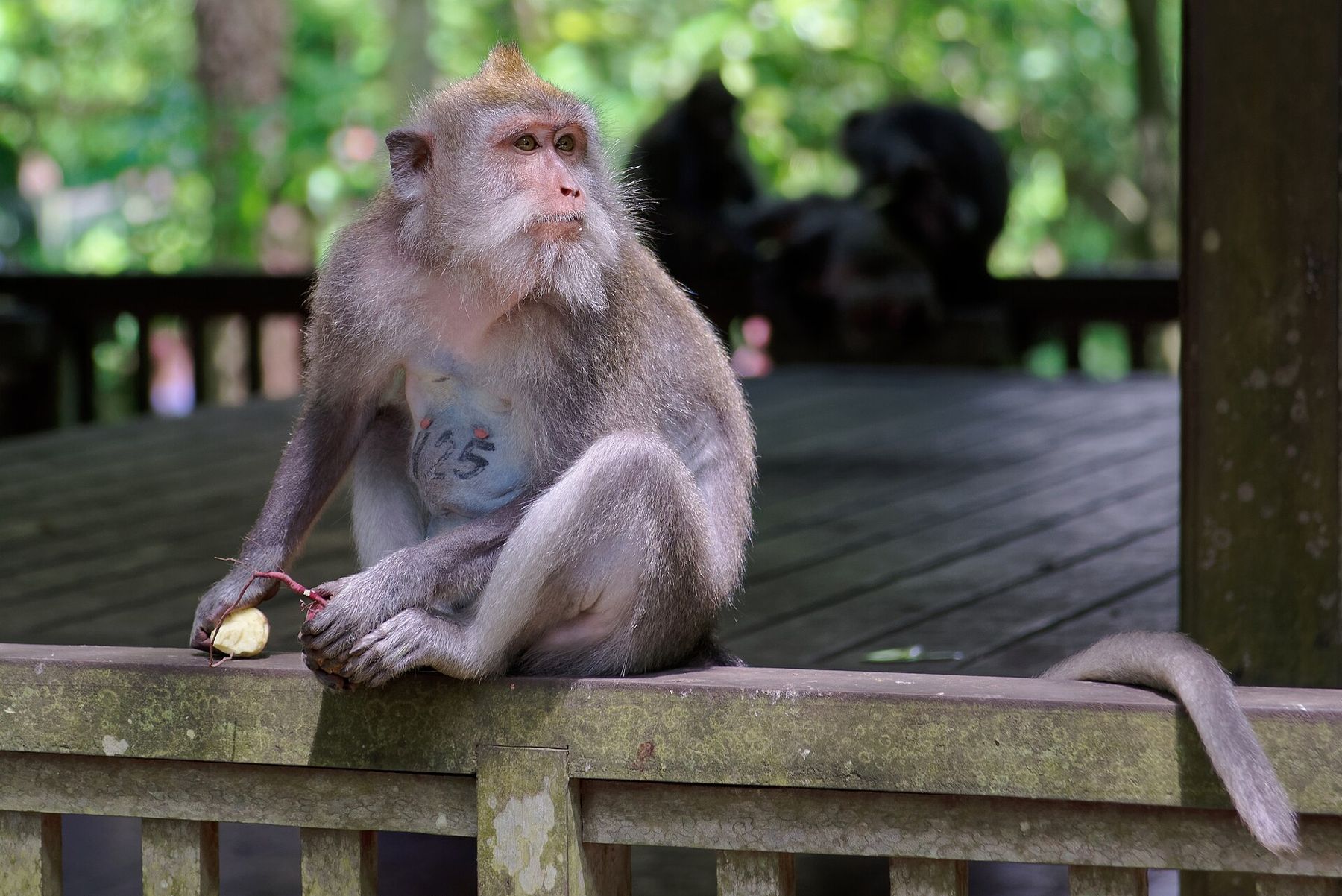
The forest is home to a large population of long-tailed macaques. They are wild animals, used to people and very good at taking things. To visit well:
- Bring no food and no plastic bags. Monkeys associate bags with food.
- Put away sunglasses, hats, earrings and anything loose.
- Do not stare at the monkeys or show your teeth; they read it as a threat.
- Do not touch, feed or tease them, and do not crouch down to their level for a photograph.
- If a monkey climbs on you, stay calm and still, and let staff help.
- If you are scratched or bitten, wash the wound thoroughly and see a doctor promptly. Rabies is present in Bali, and medical advice is essential.
Go early, soon after opening, when the forest is cool and quiet. Check opening hours and fees before you go.
Quiet in a busy town
Ubud's centre is crowded and the traffic heavy, and it can be hard to find the calm that drew you there. A few things help:
- Stay a little outside the centre, among the fields, and walk in rather than out.
- Do your walking and practice before nine, and rest through the middle of the day.
- Spend an evening at a traditional dance performance, then go home early.
- Leave one day each week with nothing planned at all.
A massage once or twice a week helps a body unused to daily practice; the guide to Balinese massage and jamu explains what to expect. For a ritual that is genuinely Balinese, the holy spring at Tirta Empul is a short drive north.
When to come
Ubud is warm and humid all year. The dry season, roughly April to October, brings clearer mornings and easier walking. The wet season has heavy afternoon rain but also fewer visitors and very green fields. Yoga is possible in any month; walking the ridge is nicer when it is dry underfoot.
On Nyepi, the Balinese day of silence, the whole island stops, and that includes yoga studios and walks. Visitors stay indoors and quiet for the day. For many, it is the most restful day of their trip.
The people who took these pictures are thanked by name, with their licences, in Photographs and thanks.