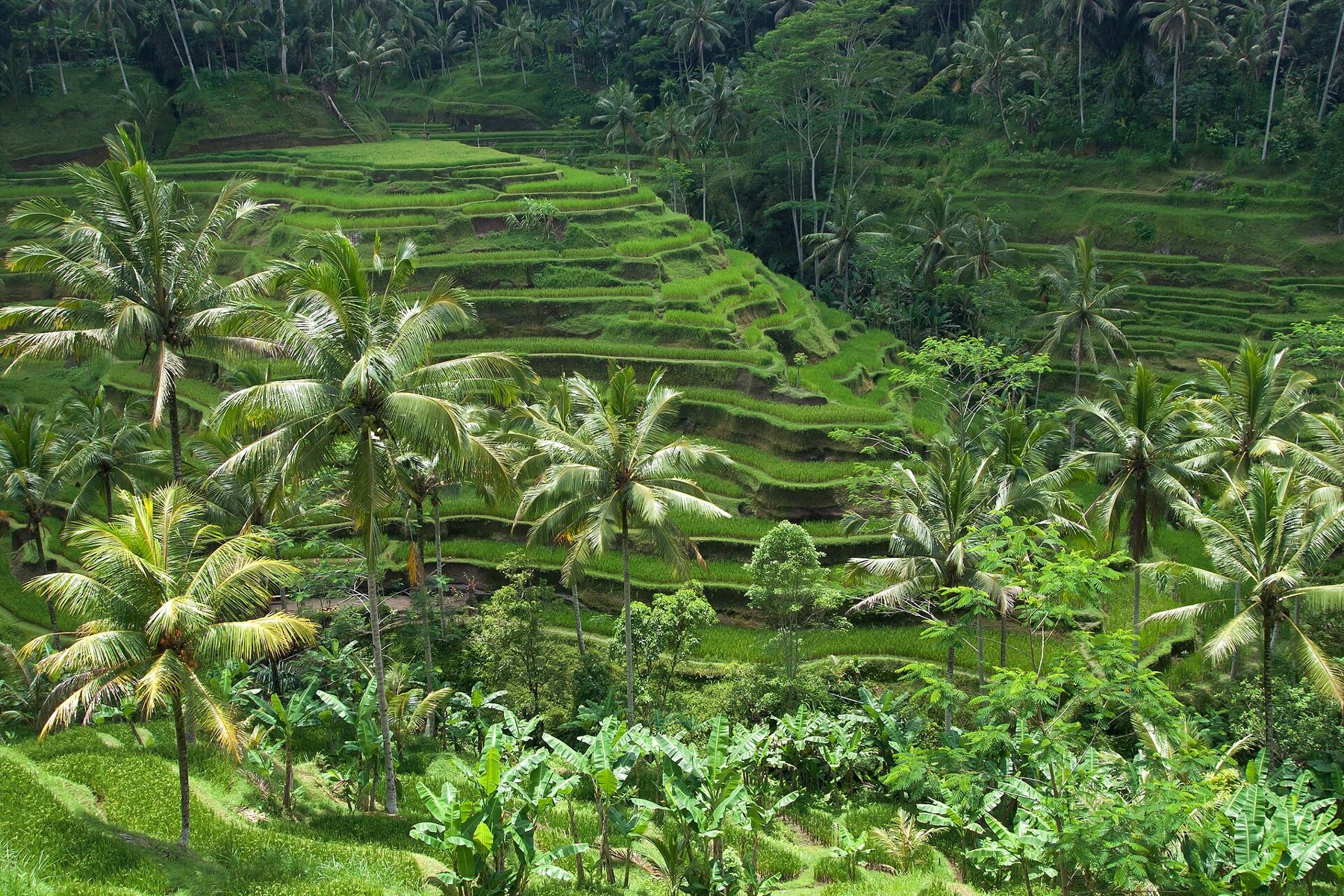
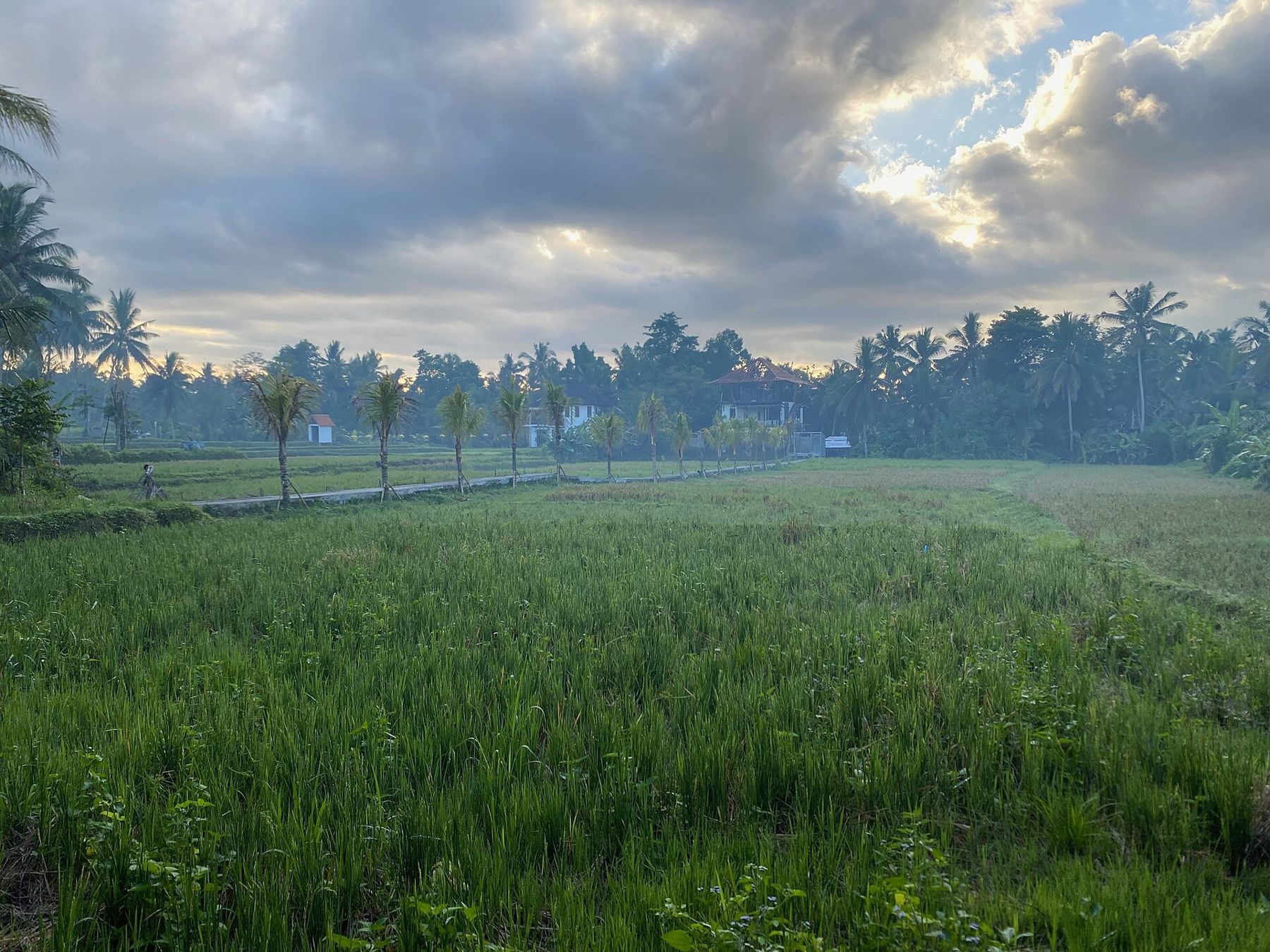
The first light reaches the terraces sideways. It catches the edges of each step of rice, then the palms along the ridge, then the water in the channels, which you hear long before you see it. For an hour or so after dawn the fields around Ubud are mostly what they have always been: places of work, with a farmer bent over the young plants and white egrets stalking the mud.
This is the hour to come. Later the heat rises, the roadside fills and the valley at Tegallalang becomes one of the busiest viewpoints on the island. Early, it is still a farmed landscape, and you are a guest walking through someone else's work.
Tegallalang, before the day begins
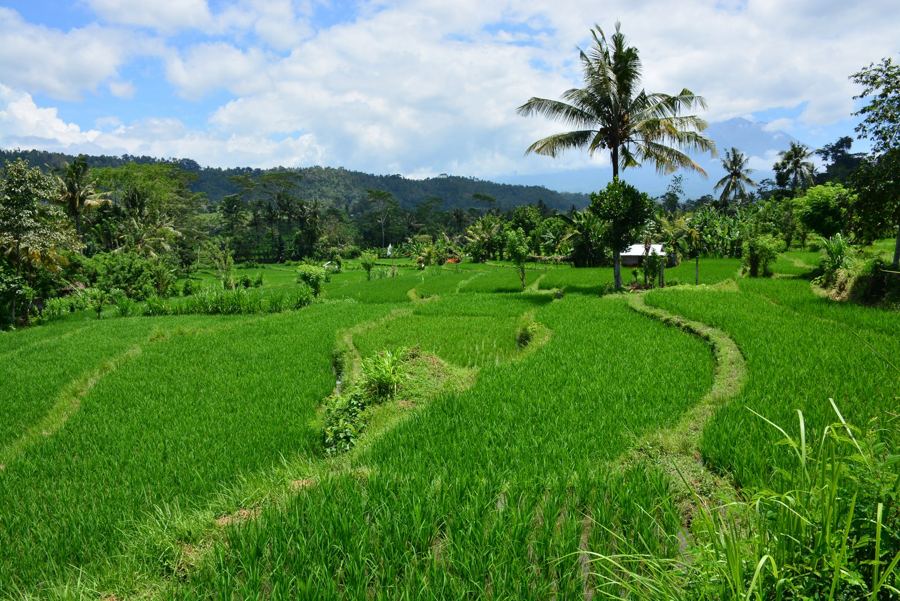
Tegallalang lies a short drive north of central Ubud, on the road towards Kintamani. The terraces fall steeply into a narrow valley lined with coconut palms, and from the road you look across a bowl of curved green steps. Paths drop down one side, cross the stream at the bottom and climb the other.
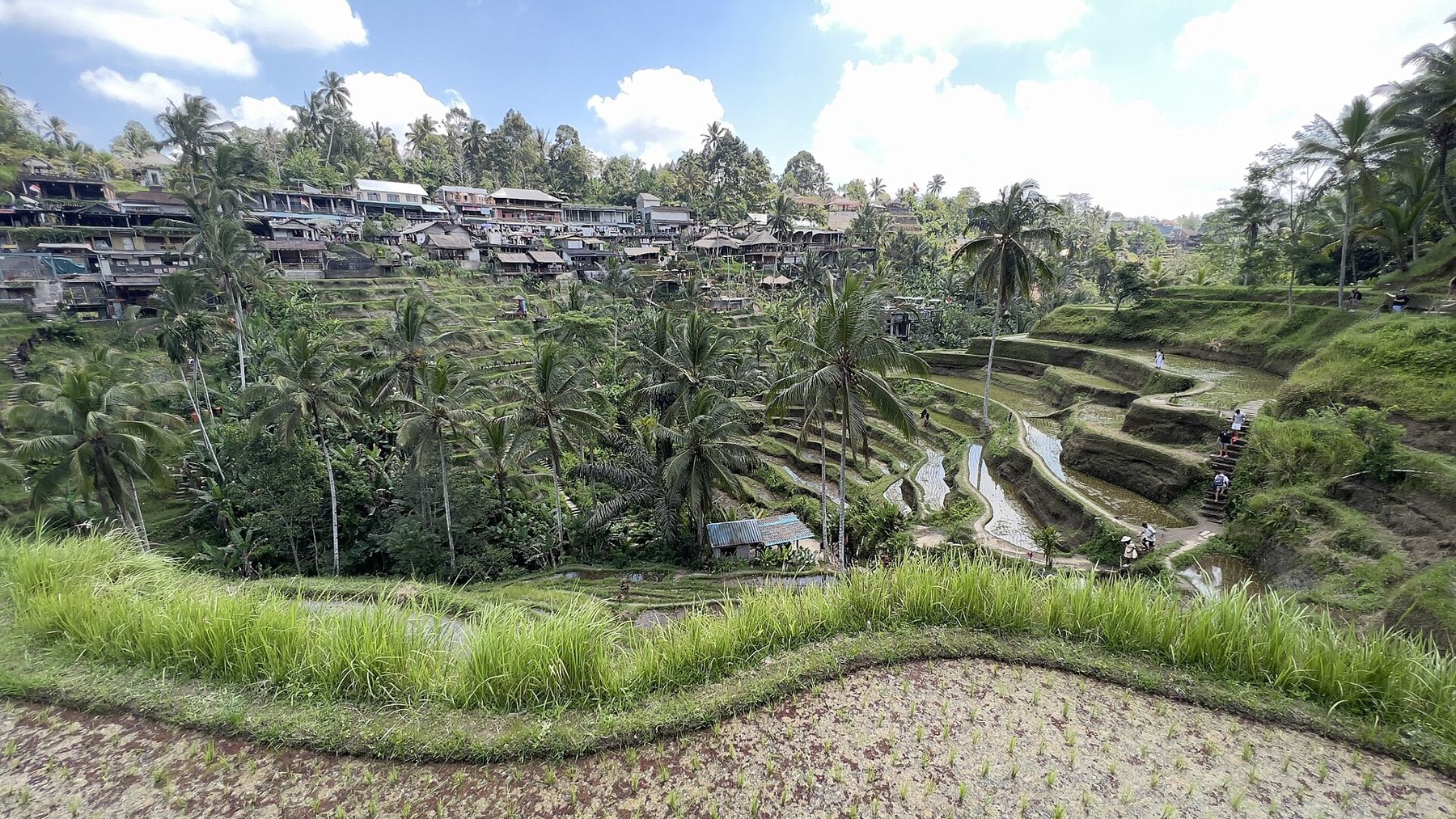
You will find donation points along the paths, sometimes several. They exist because the land is private and the farmers keep the terraces in shape, so carry small notes and pay without fuss. Amounts and arrangements change, so treat whatever you have read as a rough guide and check on the day.
Walk down slowly. The steps are uneven, often wet and sometimes cut straight from the earth. Sandals with grip are better than smooth soles, and a hat is better than a parasol on narrow paths. Halfway down, stop. The view from inside the valley, with the terraces stacked above you, is calmer than the view from the road.
How the water moves
What you are looking at is not only a view but a working system. Water comes down from the hills in streams and canals, is split at small weirs, and flows from one terrace to the next through cuts in the earthen walls. Each field drinks, then passes the water on.
The Balinese manage this through the subak, a cooperative of farmers who share a water source and decide together when to flood, plant and harvest. Each subak has its own temples and its own rituals, and you will often see a small shrine at the point where water enters a field. The full story is in the piece on the subak and its water temples, and it changes how you see every terrace on the island.
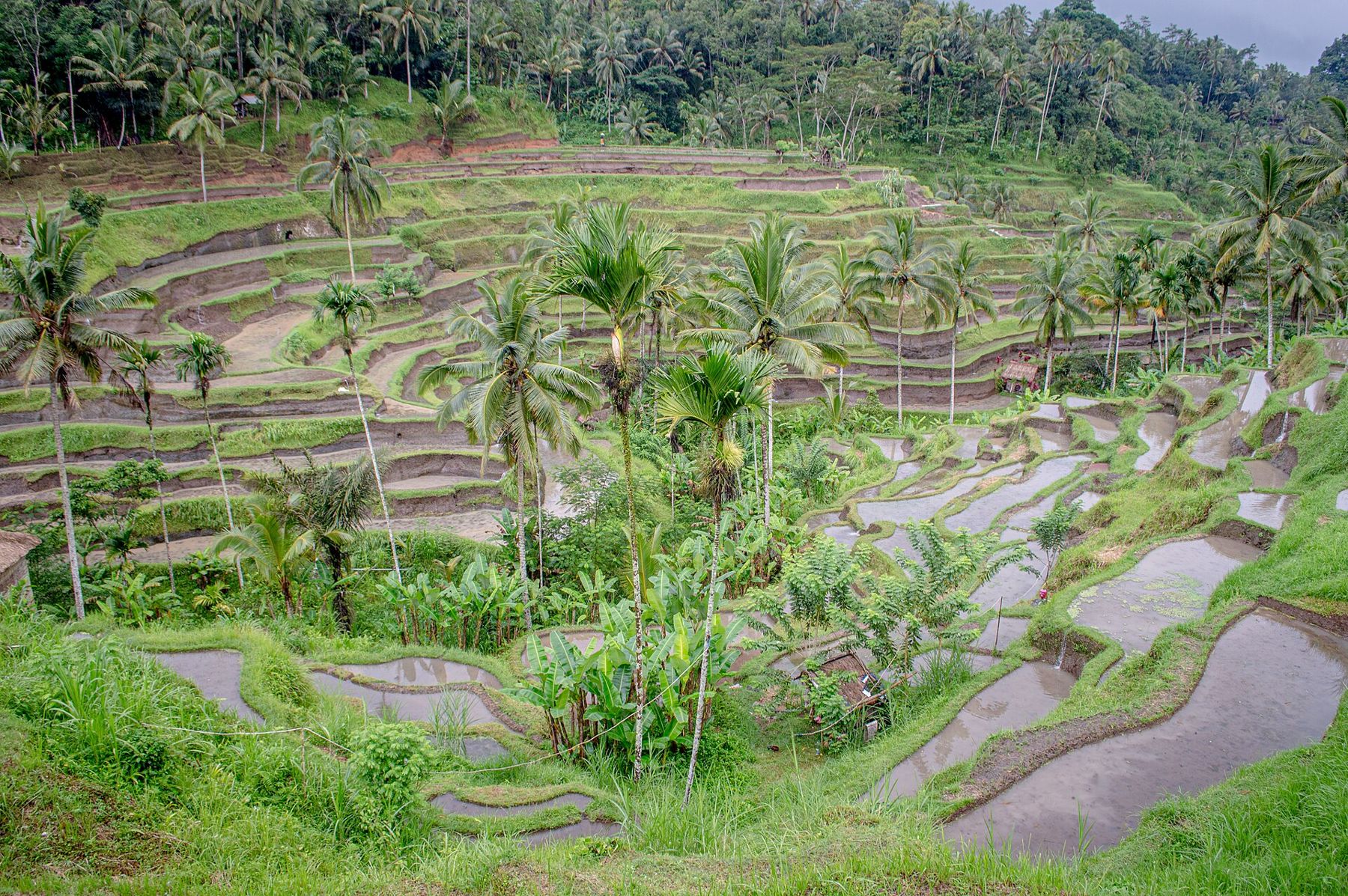
Because planting is staggered, there is no single best month to see the rice. One field may be freshly flooded and mirror-bright while the next is tall and green and a third is golden and ready to cut. In most seasons you will see more than one stage in a single morning.
Much of the work is still done by hand. Seedlings are raised in a corner nursery, pulled in bundles and pressed into the mud in rows. At harvest, groups of workers cut the stalks and thresh the grain in the field, beating the sheaves against a frame or a tarpaulin. Ducks are sometimes walked through harvested paddies to feed on fallen grain and insects. If you come across a harvest, watch from the path and keep out of the way; it is hot, heavy work, done against the weather.
Quieter fields around Ubud
Tegallalang is the famous one, but rice grows all around Ubud, and some of the best walking is in fields with no viewpoint at all. To the south-east, around Bedulu, the land is flatter and the paddies run in long sheets between villages and temple walls.
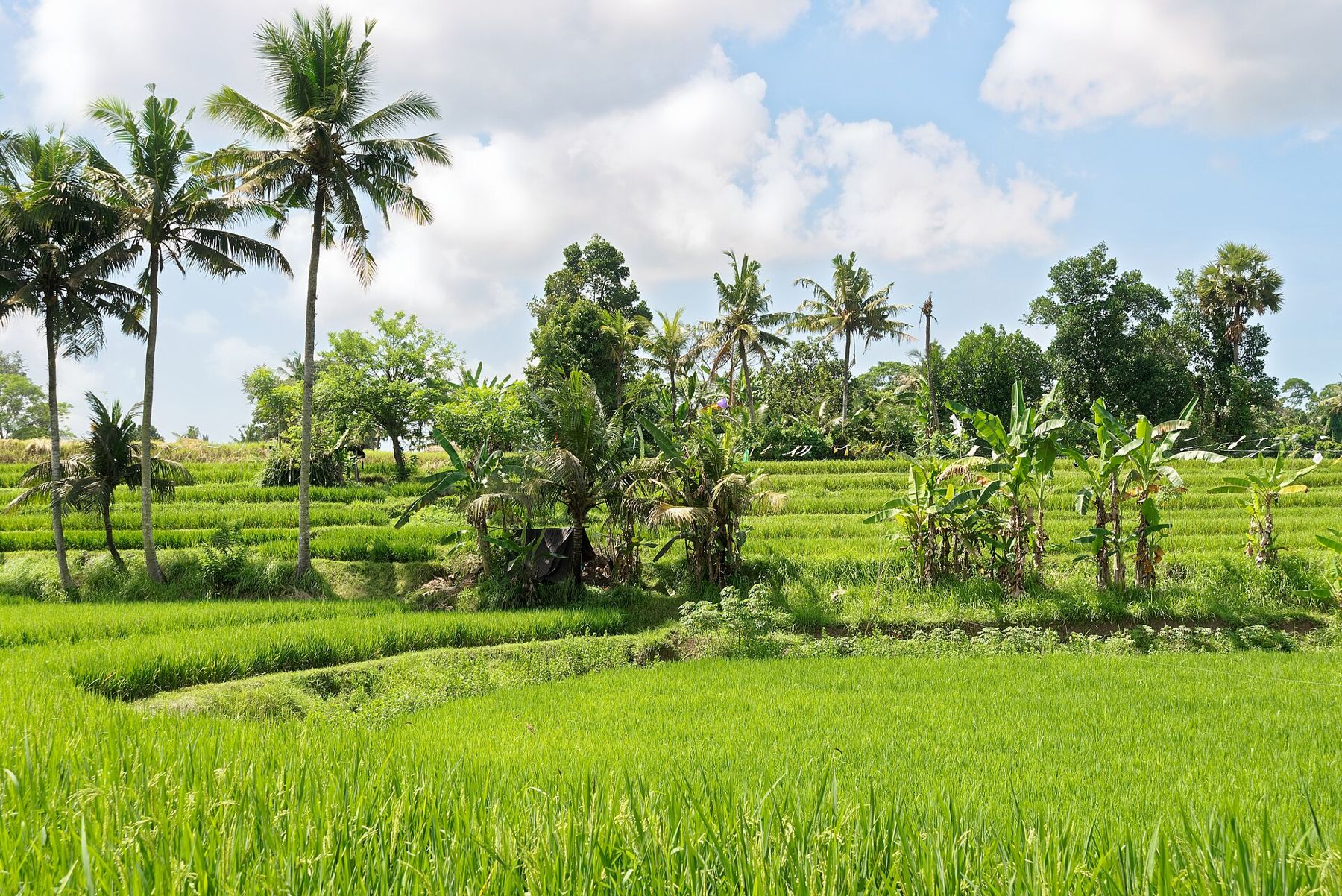
North of the centre, narrow paths leave the town and run out between the fields within minutes. Here there is often no fee and no crowd, only the irrigation channel beside you and the occasional scooter on a raised concrete path. Keep to the paths the farmers use, give way to anyone carrying a load, and turn back when a path ends at someone's house.
 Another courseSidemen, the valley that stayed slow
If you want a full day among the terraces, Jatiluwih in the west of the island is wider and higher, and sits inside the area UNESCO listed as a cultural landscape. It is a long drive from Ubud, so it rewards an early start or a night nearby rather than a quick visit. The guide to getting around without the stress has advice on timing longer journeys.
Walking with respect
The terraces are fragile. The walls between fields, called bunds, are built of packed earth, and every footstep off the path wears them a little. Walk where others clearly walk, single file, and never step into a flooded field or onto planted rice.
- Do not climb on shrines, sit on offerings or move them for a photograph.
- Ask before photographing anyone working, and accept a no gracefully.
- Keep drones in your bag unless you know the current rules and have permission.
- Leave nothing behind, not even fruit peel; plastic ends up in the channels.
- Pay the small donations without bargaining; they keep the fields farmed.
Small offerings of flowers and rice on palm leaf, called canang sari, appear at field shrines and along paths. Step around them. If you are unsure how to behave near a shrine, the basics are in the note on temple etiquette and what to wear, and the same courtesy applies in the fields.
Walk where others clearly walk, single file, and never step into a flooded field or onto planted rice.
When to go, and when to stop
Go at first light. The air is cooler, the light is soft and long, and the paths are close to empty. By mid-morning the heat builds and so do the crowds, especially at Tegallalang. If you can only come later, choose the fields away from the viewpoints.
In the wet season, roughly November to March, paths turn slick and streams run high after rain. Afternoon downpours are common, which is another reason to walk early. The dry months bring firmer ground and clearer mornings but also more visitors. The piece on wet season and dry season covers how the months differ.
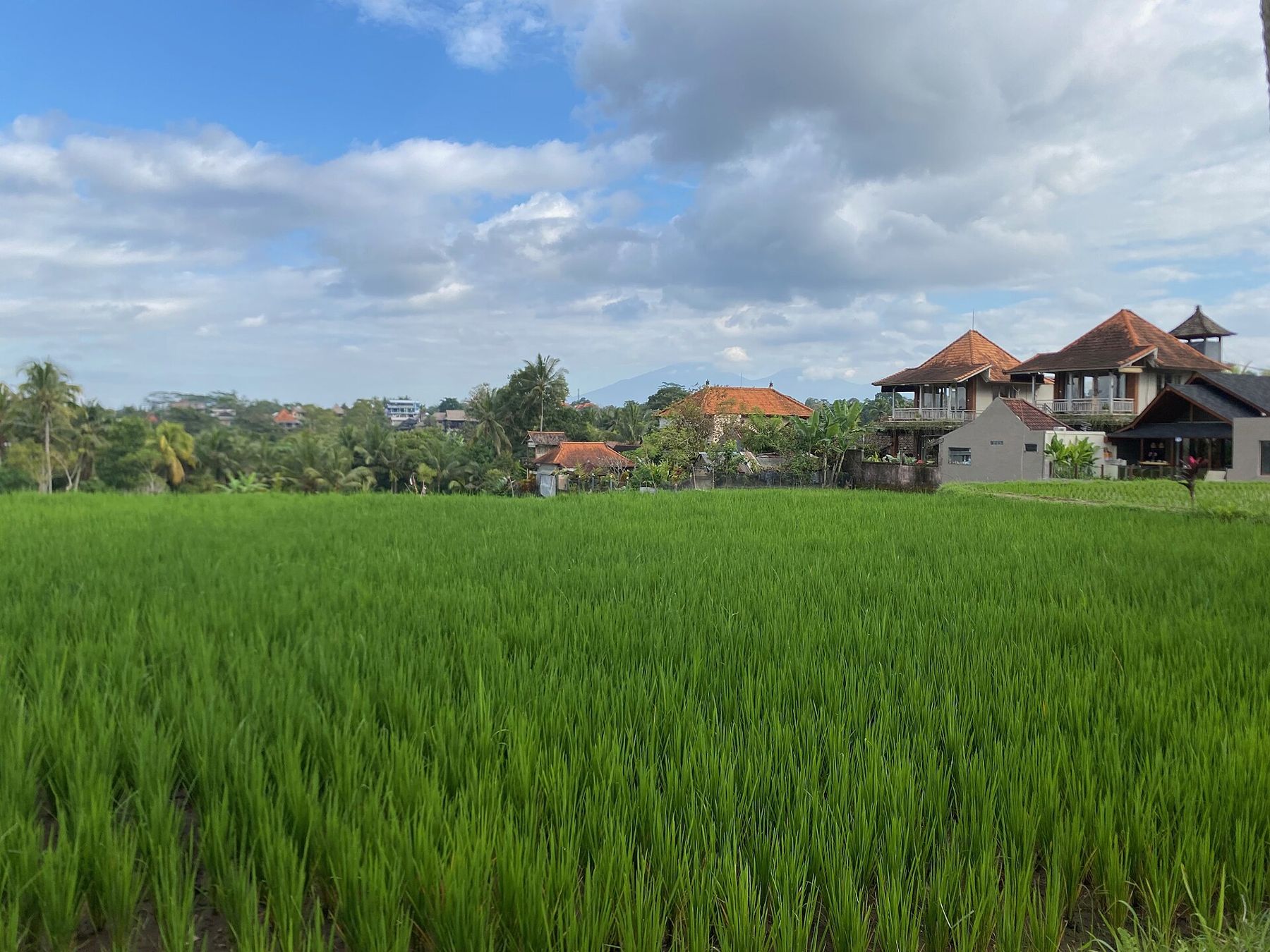
Then stop. Find a patch of shade on a raised path, sit, and give the place twenty minutes without a camera. The water keeps moving from field to field. A farmer calls across the valley. A dog barks somewhere in the village above. None of this is staged, and that is the point of coming early: you see the terraces as a working place rather than a backdrop.
Walk back up before the heat sets in, buy a coconut from a roadside stall if there is one, and let the rest of the day be slow.
The people who took these pictures are thanked by name, with their licences, in Photographs and thanks.