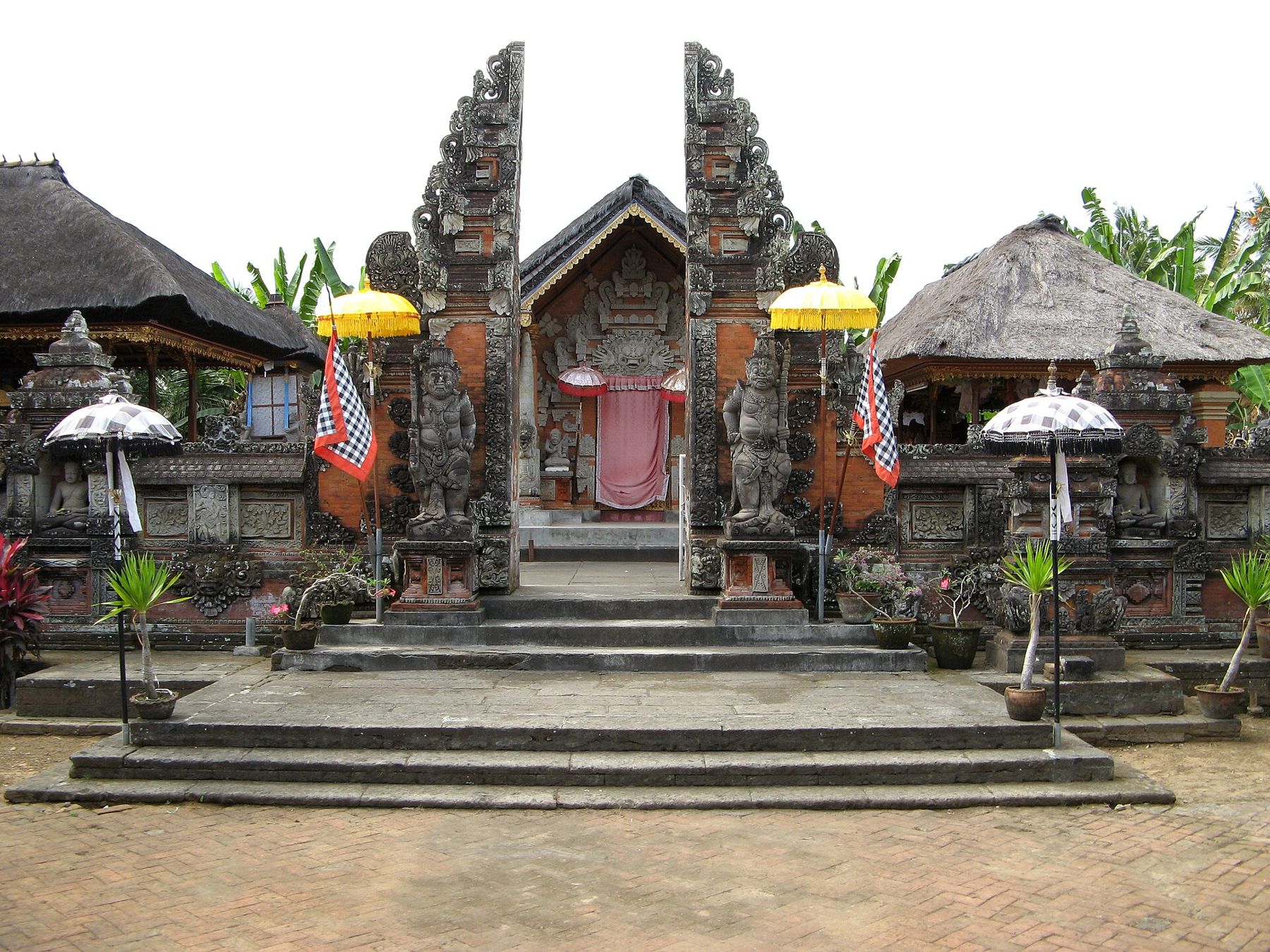
There are temples everywhere in Bali. Every village has several, every family compound has its own shrine, and there are temples at springs, lakes, crossroads, markets, rice fields and the edge of the sea. Most are not monuments but places where people pray every day. Visitors are welcome at many of them, on the understanding that they behave as guests.
The customs are simple, and the Balinese are generally patient with visitors who make an honest effort.
How a temple is laid out
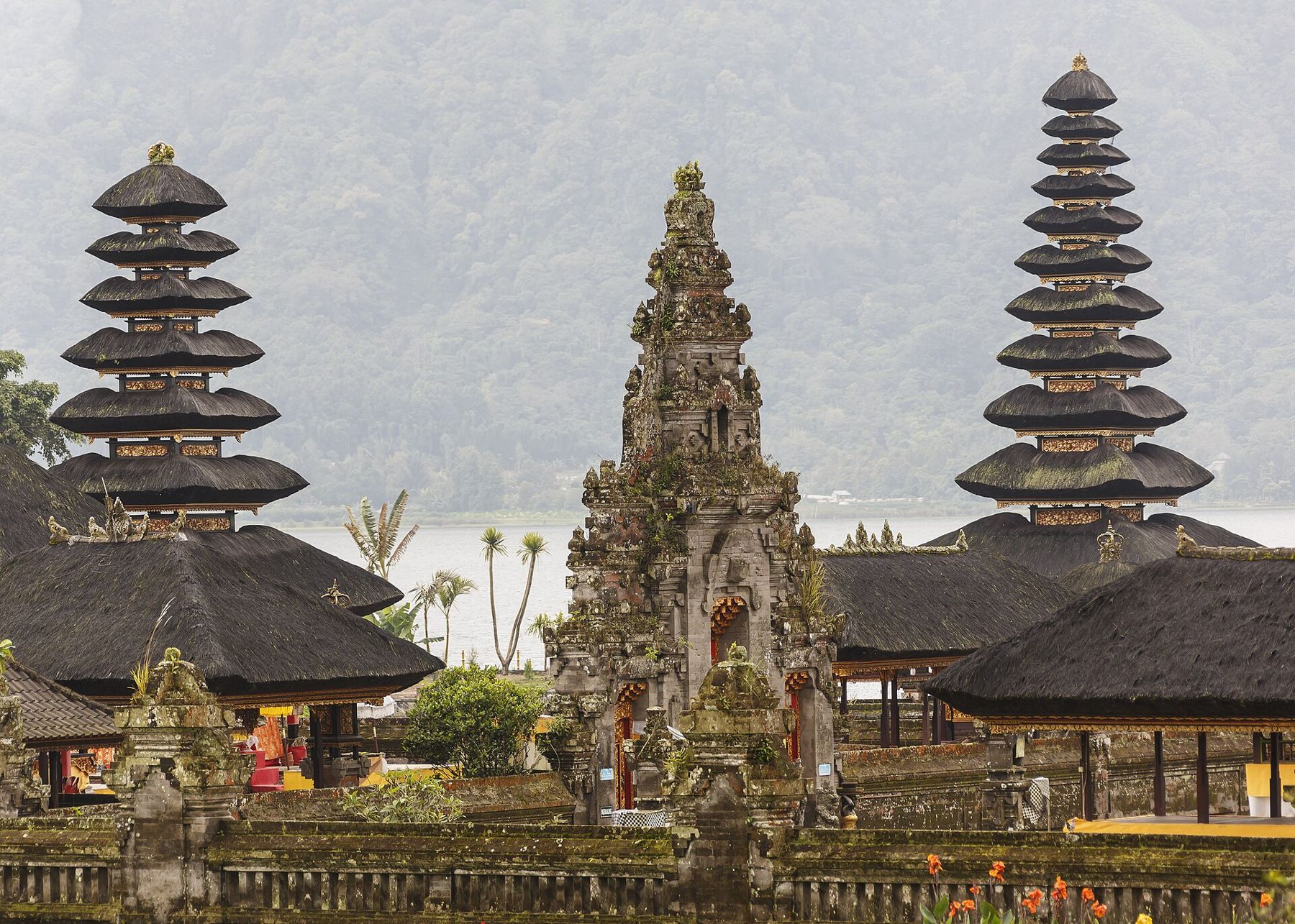
A Balinese temple, or pura, is usually an open-air compound of walled courtyards rather than a single building. Many are arranged in three parts, moving from the outer world towards the sacred: an outer courtyard, a middle courtyard and an inner courtyard where the main shrines stand. You often pass through a split gate, called candi bentar, into the first courtyard, and a roofed gate into the inner one.
Visitors are often allowed into the outer courtyards, but the innermost courtyard is frequently reserved for worshippers, particularly during ceremonies. Look for ropes, closed gates or signs, and if you are unsure, ask or stay outside.
What to wear
Everyone entering a temple, men and women alike, wears a sarong, called kamen, around the waist, and a sash, called selendang, tied at the waist over it. Shoulders and upper arms should be covered. Many popular temples lend or hire sarongs and sashes at the entrance, but carrying your own is easy and polite.
- Wrap the sarong so it reaches below the knees.
- Tie the sash around your waist, over the sarong.
- Wear a top that covers your shoulders; a light shirt is fine.
- Remove hats and sunglasses inside the courtyards.
At major ceremonies, Balinese worshippers wear full temple dress, often in white or bright colours. Visitors are not expected to copy this, but neat, modest clothing shows respect.
Who should not enter
By Balinese custom, women who are menstruating do not enter temples. The custom is about ritual purity rather than hygiene, and Balinese women observe it themselves; many temples display a notice at the entrance. Visitors are asked to follow it in the same way, which in practice means choosing another day or waiting outside.
The same principle of ritual purity applies to people with open, bleeding wounds and to those in a period of mourning after a recent death in the family. These customs are part of a whole way of seeing the sacred, and following them is the most respectful thing you can do.
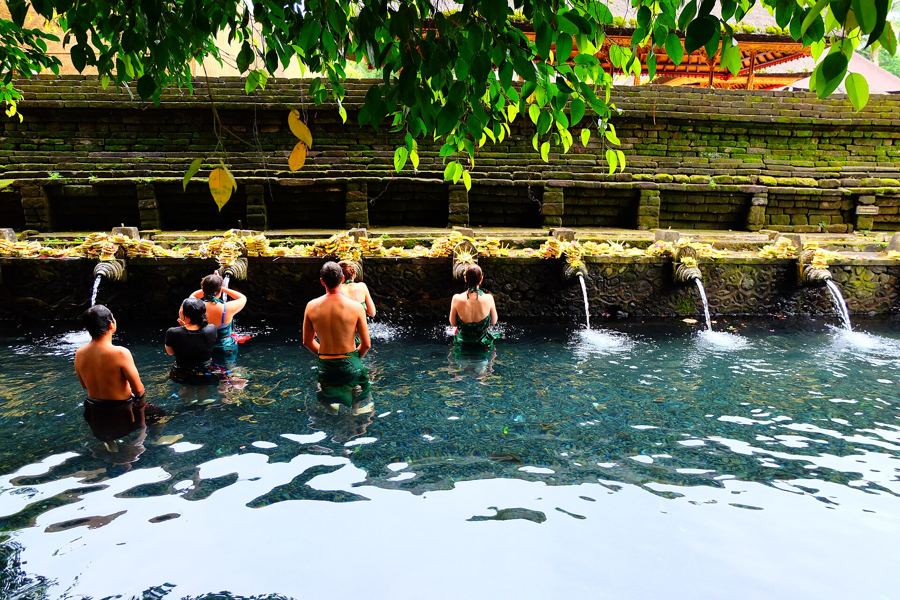 Another courseTirta Empul's holy spring
Offerings on the ground
Everywhere in Bali you will see small offerings: little palm-leaf trays holding flowers, a pinch of rice, perhaps a sweet, and a stick of incense. These are canang sari, made and placed every day by Balinese women and men as acts of gratitude and devotion. They sit on shrines, on doorsteps, on the dashboards of cars and on the ground.
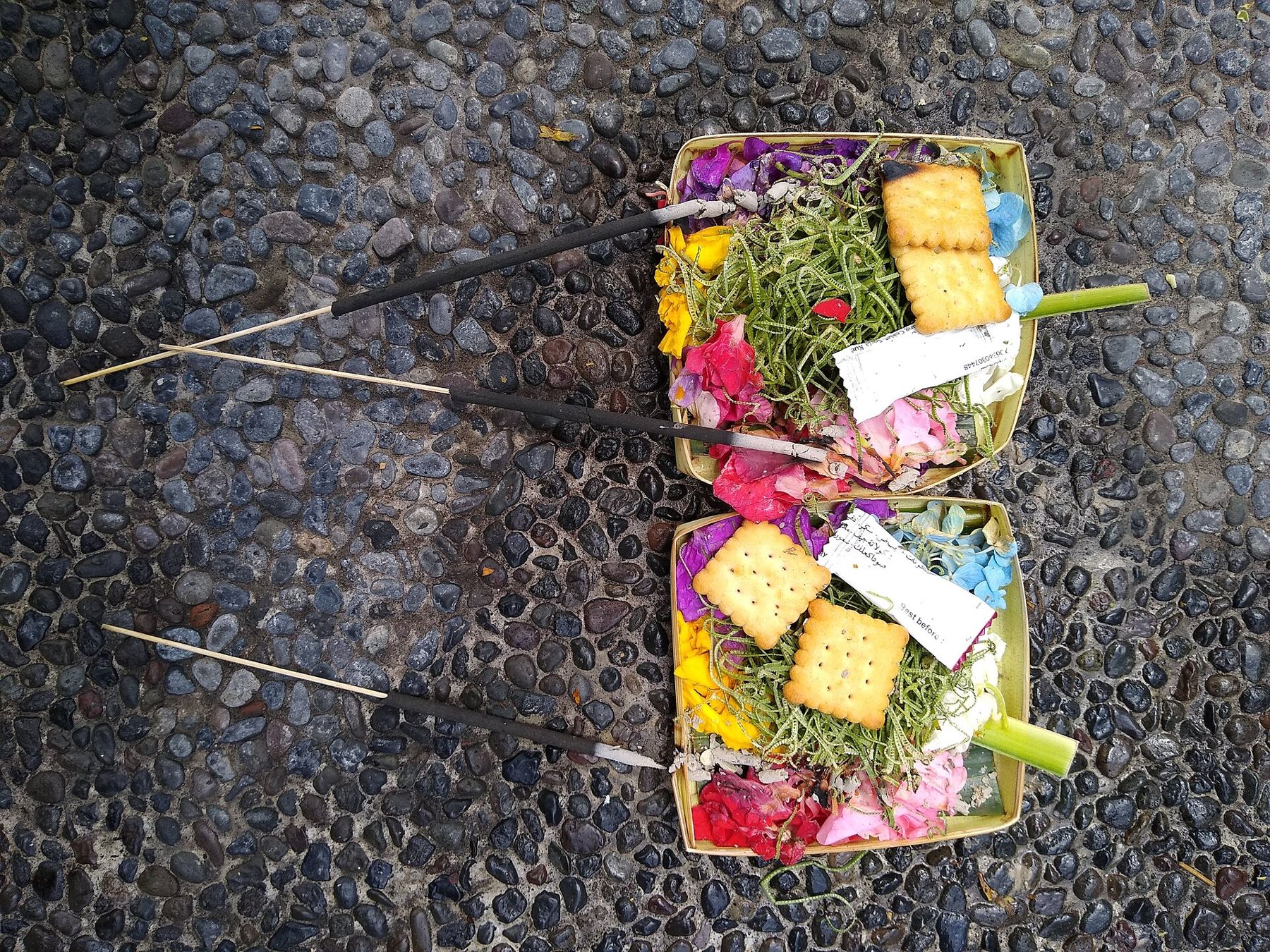
Offerings on the ground are often meant for lower spirits, and many end up scattered by feet, dogs and rain once they have been given. That is expected. Even so, try not to step on them. Walk around them where you can, and if you do brush one by accident, do not panic; simply be more careful.
Never pick up, move or rearrange an offering for a photograph. If you see someone placing offerings, give them space, and wait until they have finished before you walk past. The few seconds of prayer that go with each one are part of the gift.
Behaving inside
- Speak quietly and keep your phone silent.
- Do not climb on walls, shrines or statues, or sit on them.
- Do not walk in front of people praying, and do not stand higher than a priest.
- Avoid pointing your feet at shrines or people when sitting.
- Use your right hand to give or receive things.
- Put a donation in the box if there is one, and pay entry fees where they apply.
If a priest offers you holy water or rice grains, watch how others receive them and follow. If you are not sure, a polite smile and a step back is always acceptable.
Photography with care
Many temples are beautiful, and photography of the architecture is generally fine in outer courtyards. People are a different matter. Ask before photographing anyone, especially at prayer, and accept a refusal gracefully. Never use flash during a ceremony, and never position yourself in the path of a procession or between worshippers and a shrine.
Drones need extra care. Rules change, and flying over temples or ceremonies can cause real offence. Keep yours in its case unless you have checked the current rules and have permission.
Putting it into practice
The easiest place to practise is a quiet village temple on an ordinary day, or the outer courtyard of a major temple early in the morning. At Tirta Empul, the holy spring temple near Tampaksiring, these customs also shape how visitors take part in the purification bath; the guide to Tirta Empul's holy spring explains it step by step.
During festivals such as Galungan the temples are at their busiest and most beautiful; read Galungan and the penjor before you go. Water temples tied to the rice fields have their own role, described in the subak and its water temples. Wherever you are, the rule beneath all the others is the same: you are a guest in someone else's place of prayer.
The people who took these pictures are thanked by name, with their licences, in Photographs and thanks.