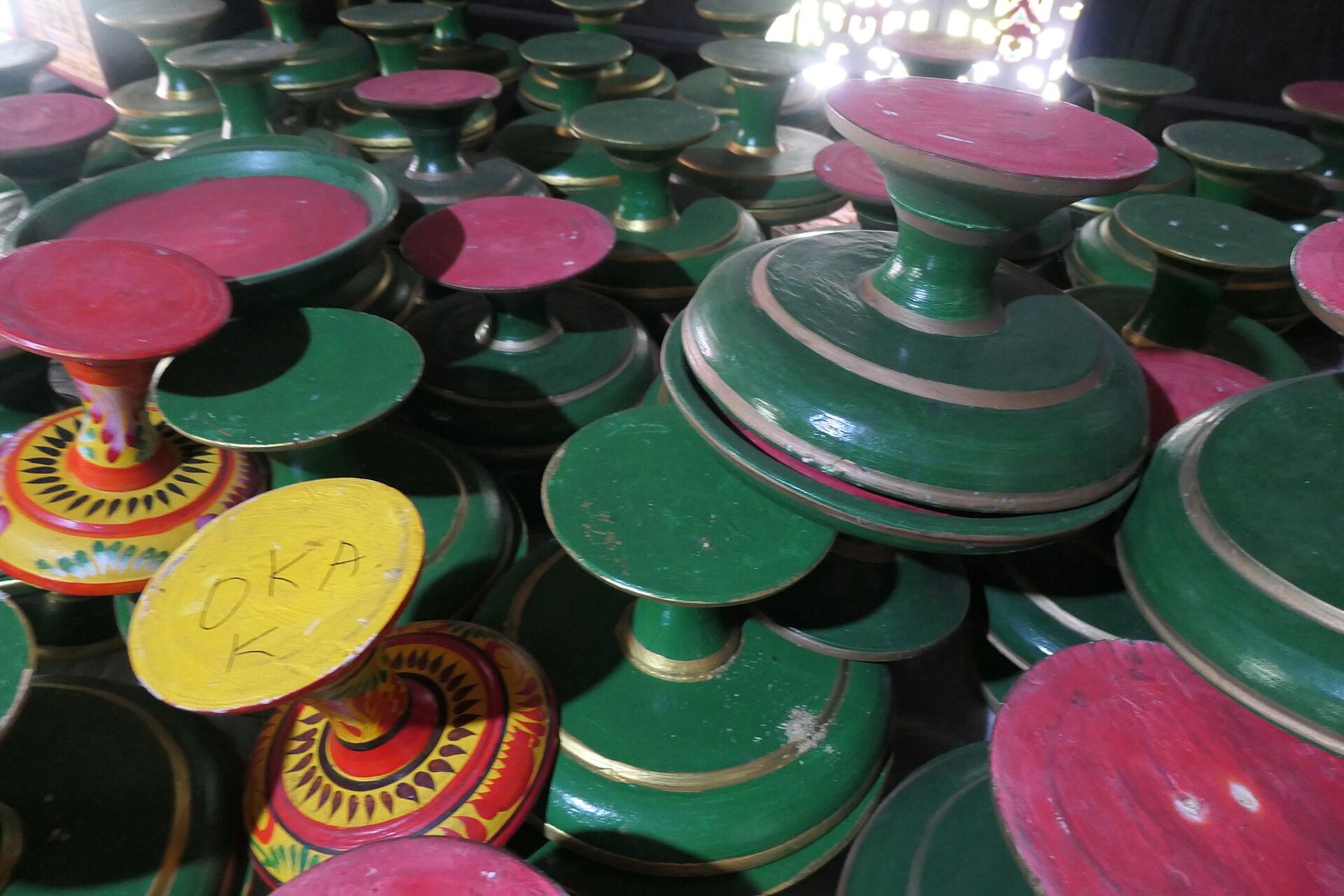
Almost everywhere you go in Bali, something is happening that looks beautiful through a lens: a woman setting down an offering, a procession winding down a road under umbrellas, a priest sprinkling holy water, a temple gate against the sky. That is because religion here is part of everyday life, practised in streets, courtyards and fields as much as in temples.
That openness is a kind of trust. Photographing it well means remembering that you are in someone's place of worship, at someone's family event, in someone's working day.
People first
The simplest rule is the oldest: ask before you photograph someone. A smile, a gesture to the camera and a nod is often enough. If the answer is no, or the person turns away, accept it and lower the camera.
- Ask parents before photographing children, and avoid photographing children you do not know.
- Do not photograph people bathing in rivers, springs or the sea.
- Be careful with people at work in markets and fields; they are busy, not posing.
- If someone asks for money in return for a picture, decide whether you are happy to pay before you take it, not after.
- Show people the photo if they would like to see it.
Think, too, about what happens to the picture afterwards. A portrait shared widely online can follow a person for years. If you plan to publish a photograph of someone, say so when you ask, and respect a refusal.
At ceremonies
Ceremonies happen constantly: temple anniversaries, tooth filings, weddings, purification rites and the great island-wide festivals such as Galungan. Many are open to respectful onlookers. Some are not. If there is any doubt, ask someone at the edge whether it is all right to watch and to take photographs.
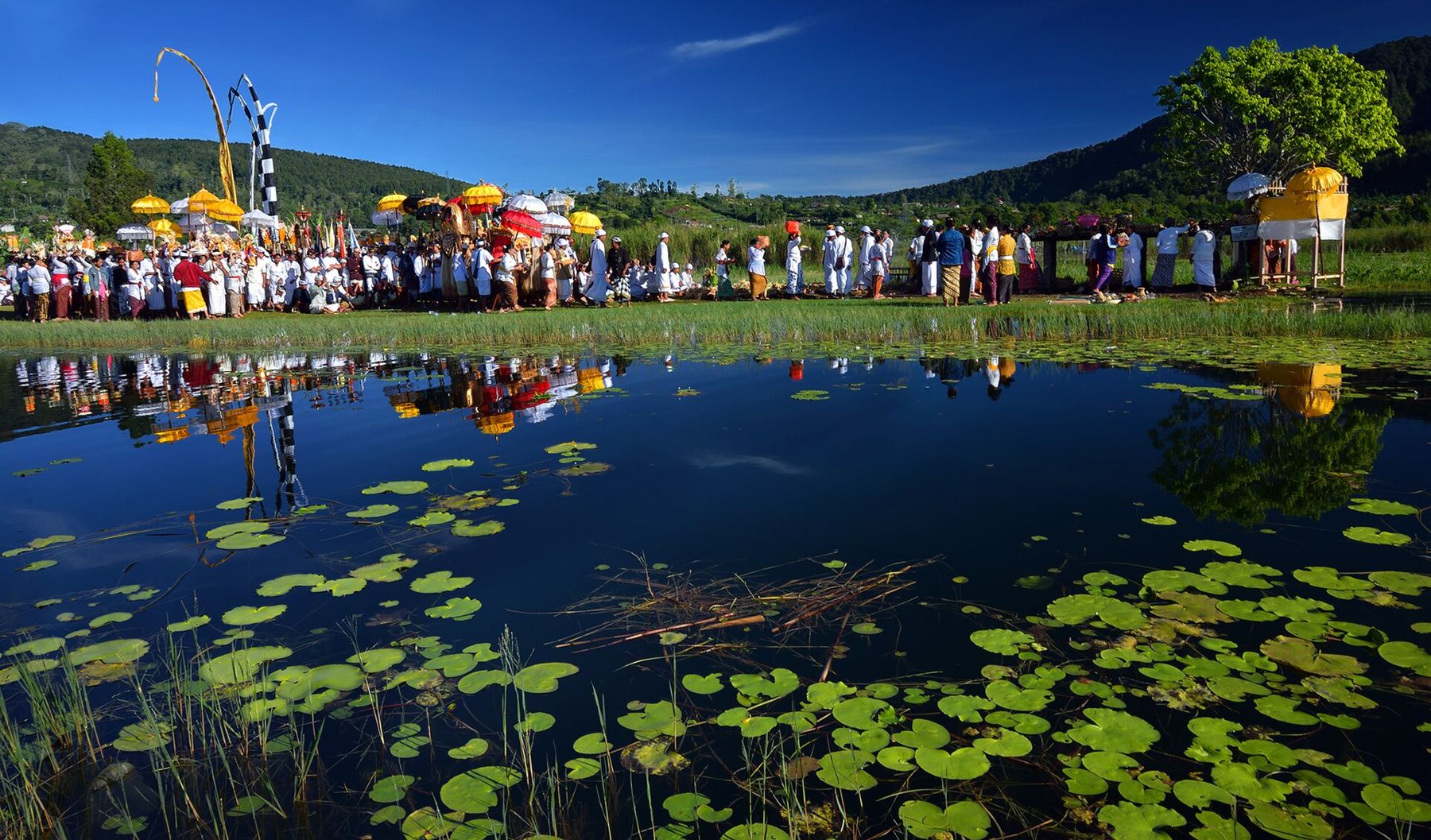
When you are welcome:
- Wear a sarong and sash, even if you are only watching from the roadside.
- Stay at the edge and keep low. Do not stand higher than the priest or the worshippers, and never climb walls or shrines for a better angle.
- Never walk in front of people who are praying, and never step between a priest and the offerings.
- Turn off the flash and the shutter sound.
- Do not ask a procession to stop, slow down or repeat anything for you.
Before Nyepi, the day of silence, temple objects are carried in procession to the sea or to lakes for purification in the ceremony called Melasti. On the eve of Nyepi, the ogoh-ogoh effigies are paraded through the streets. Both are joyful and public, and photography is generally welcome from the roadside. On Nyepi itself, visitors must stay indoors. The guide to Nyepi, the day of silence explains what is expected.
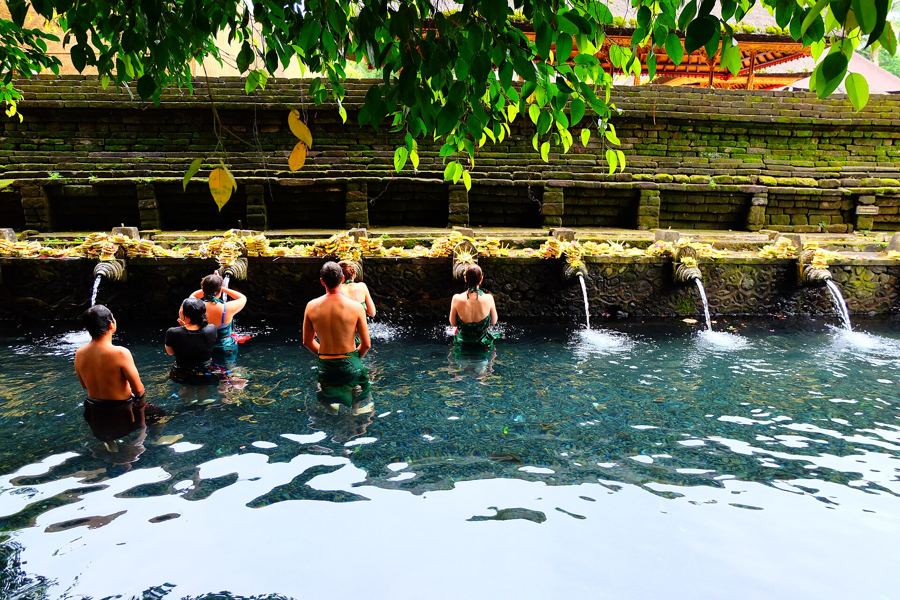 Another courseTirta Empul's holy spring
Cremations
A Balinese cremation, ngaben, is a grand and often colourful event, and visitors sometimes find themselves near one. It is also a funeral. If you are close by, keep a respectful distance, dress modestly, and ask before photographing. Do not photograph the grieving family up close. Many people decide simply to watch.
Temples and offerings
Temples have their own rules. Outer courtyards are usually open to properly dressed visitors; inner sanctuaries are often closed to anyone who is not there to pray. Some temples ban photography in certain areas. Follow signs and the guidance of temple staff, and read the temple etiquette guide before you start exploring.
Canang sari, the small palm-leaf offerings placed on the ground, on shrines and in doorways every day, are acts of prayer. Photograph them if you like, but do not move them, step on them, or arrange them for a shot. If you want to see how they are made, ask; many people are happy to show you.
Remember that the people placing offerings are in the middle of a prayer, however brief and practised it looks. Wait until they have finished before raising a camera, and keep your distance while incense is still burning.
Sacred sites are not stage sets. Visitors have been sent home from Bali after posing for disrespectful photographs at holy trees, temples and mountains, and the island's authorities take such behaviour seriously. Avoid revealing clothing, playful poses on shrines and anything you would not do in a church or mosque at home.
Drones
Drones are restricted in Indonesia. Rules cover flying near airports, over crowds and in certain protected areas, and permits may be needed. Many temples and their surroundings do not allow drones at all, and a drone hovering over a ceremony is both disruptive and disrespectful. Check the current regulations before you bring one, ask permission where you plan to fly, and never fly over temples, ceremonies, cremations or people who have not agreed.
The famous spots
Some places, such as the split gate at Pura Lempuyang or the rock temple at Tanah Lot, draw long queues of people waiting for the same photograph. You can join them, but you might also choose a different hour or angle. The guide to Tanah Lot at a quieter hour shows how a morning visit changes everything.
Wherever you are, keep the queue moving, do not block pilgrims, and remember that the place exists for prayer first.
Putting the camera down
The best moments in Bali are often the ones you do not photograph: the sound of a gamelan rehearsal at dusk, the smell of incense in a courtyard, the hush before a priest begins to pray. Try leaving the camera in your bag for a whole ceremony, or a whole morning. You will remember more of it.
The people who took these pictures are thanked by name, with their licences, in Photographs and thanks.