Munduk is a village on a ridge in the highlands of Buleleng, in northern Bali, a short drive past the twin lakes of Buyan and Tamblingan. The land falls away steeply on both sides into valleys of forest and plantations, and in the morning you can often see down to the north coast and the sea. By afternoon the cloud usually arrives, and the village sits in a soft grey world.
It is a place for walking. Paths lead from the village down through gardens of cloves, coffee, cacao and fruit trees to several waterfalls in the ravines below.
The clove and coffee hills
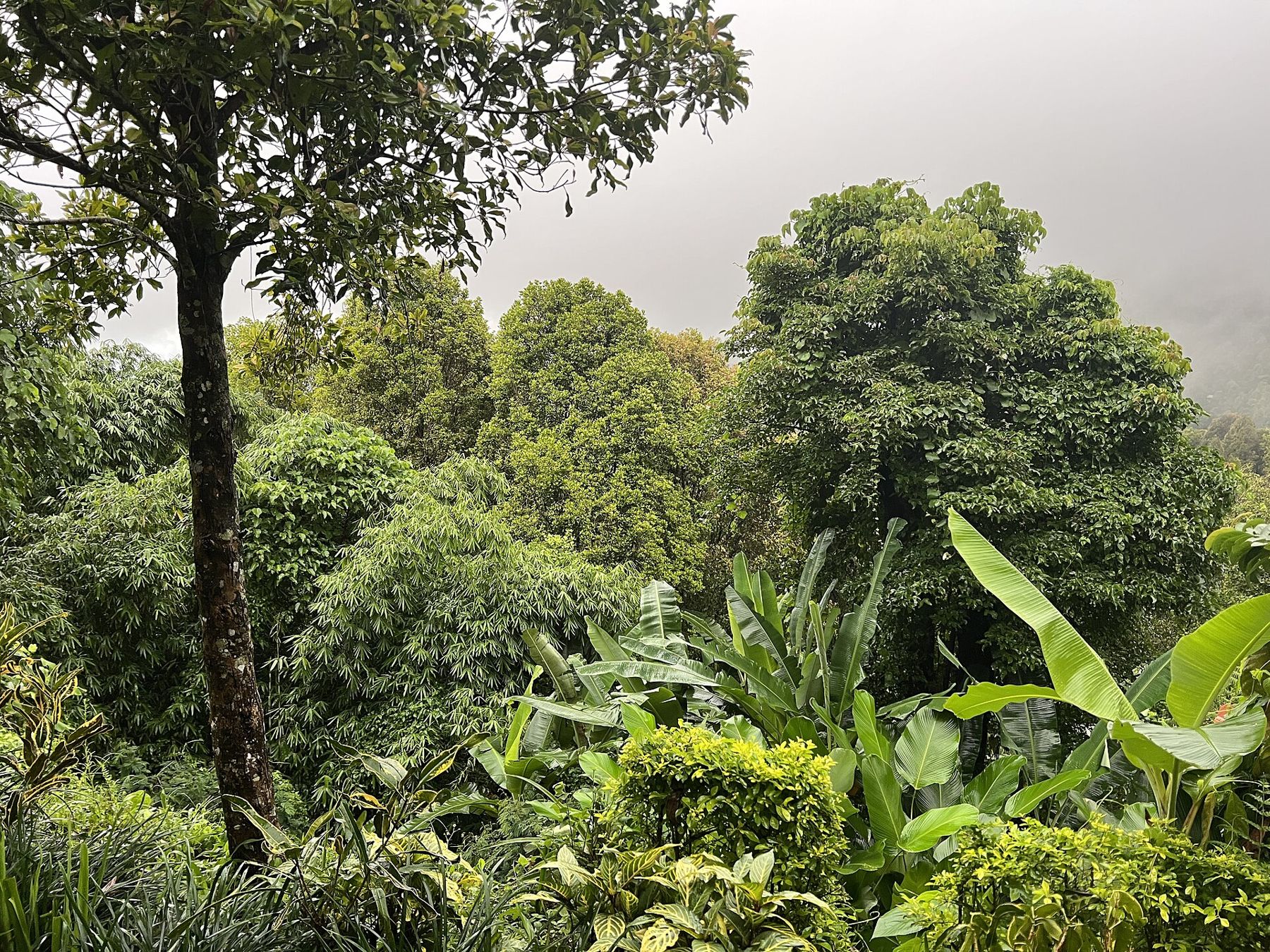
Cloves have long been the main crop on these slopes. The trees are tall and glossy, and when the buds are harvested they are spread on mats along the roadsides and in courtyards to dry, turning from pink to deep brown. The scent of drying cloves in the harvest months is one of the strongest memories most people take away from Munduk.
Coffee grows here too, often in the shade of taller trees, along with cacao and bananas. Many families farm small plots, and the paths you walk are often their working paths. Keep to them, close any gates, and pick nothing.
Much of Indonesia's clove harvest goes into kretek, the clove cigarettes smoked across the country, which is why the price of cloves matters so much in villages like this one. A good year shows in new roofs and fresh paint; a poor one is felt for a long time. Walking through the plantations, it helps to remember that the pretty hills are also a living, and a fragile one.
The village grew prosperous in the Dutch colonial period through these crops, and a few houses from that time still stand along the main road, with wide verandas and old tiled roofs.
Walking to the waterfalls
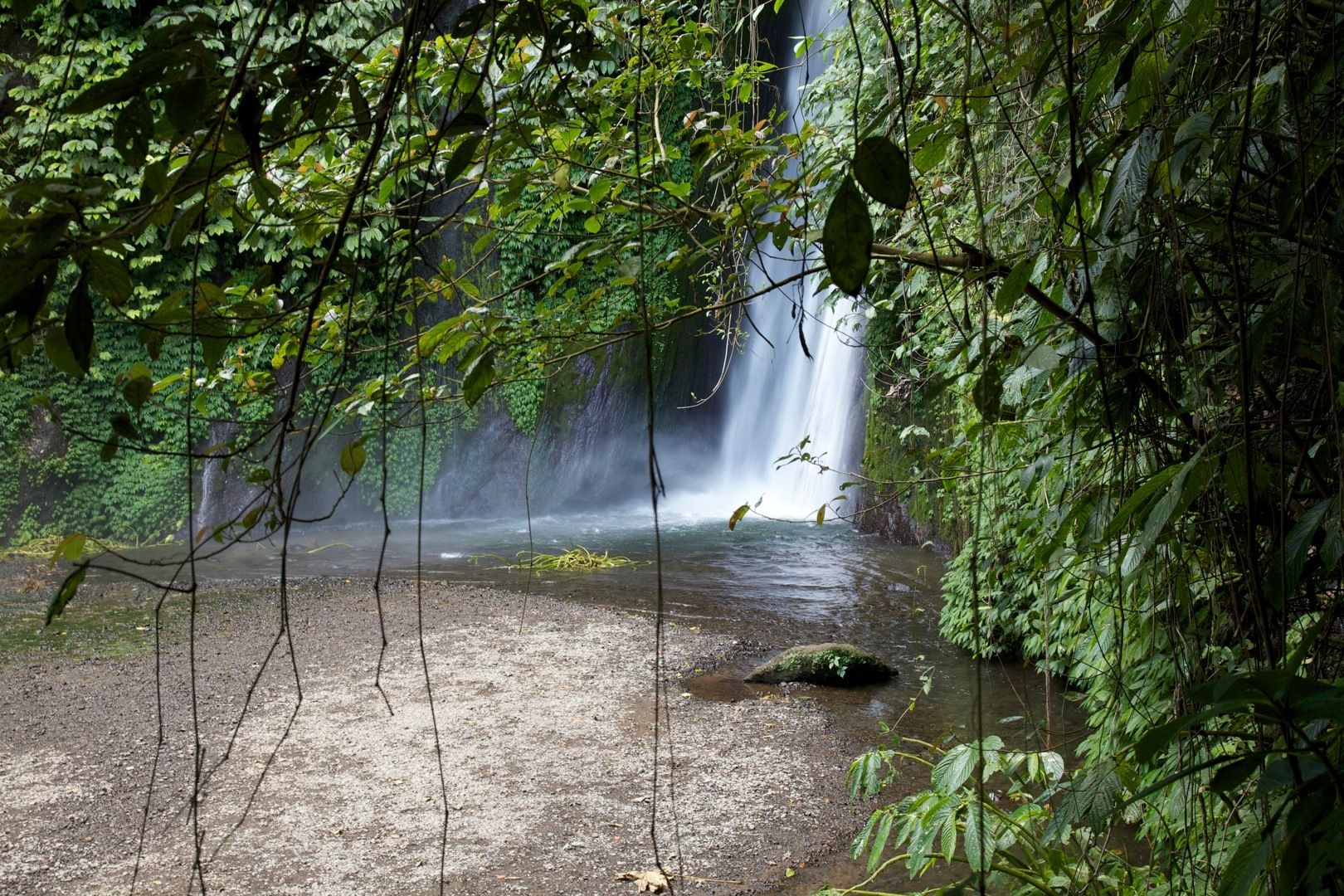
Several waterfalls lie within walking distance of the village, including Munduk Waterfall and Melanting, with others such as the twin falls at Banyumala a short drive towards the lakes. Each sits at the bottom of a forested ravine, reached by steps and earth paths. The falls are tall and narrow, dropping into pools edged with ferns and moss, and the spray keeps the air cool and damp.
Some walks link two or three falls in a loop of a few hours. Others are short descents from a road, followed by a stiff climb back. Local guides are available in the village and are worth taking for the longer routes, both for the way and for what they can tell you about the plants and the farms you pass.
Safety on the paths
- Paths are steep and slippery, especially after rain. Wear shoes with real grip, not sandals.
- Stay back from the base of the falls. Rocks can fall, and the pools can be deeper and colder than they look.
- Swim only where it is clearly allowed and the water is calm. After heavy rain, rivers can rise fast; do not cross them.
- Obey warning signs. They are put up for good reasons on these slopes.
- Start early so you are not walking back up in the afternoon rain or in fading light.
 Another courseLake Bratan and the highland temples
Mist, rain and the time of year
The dry season, roughly April to October, brings clearer mornings and firmer paths. Even then, cloud tends to build by midday. In the wet season the waterfalls are fuller and more powerful, and the forest is very green, but the paths turn to mud and leeches are more common. Many people find the shoulder months a good balance. Read more on the wet and dry seasons before you choose.
The temperature here is lower than on the coast, and evenings can be chilly. Bring a jumper.
The lakes next door
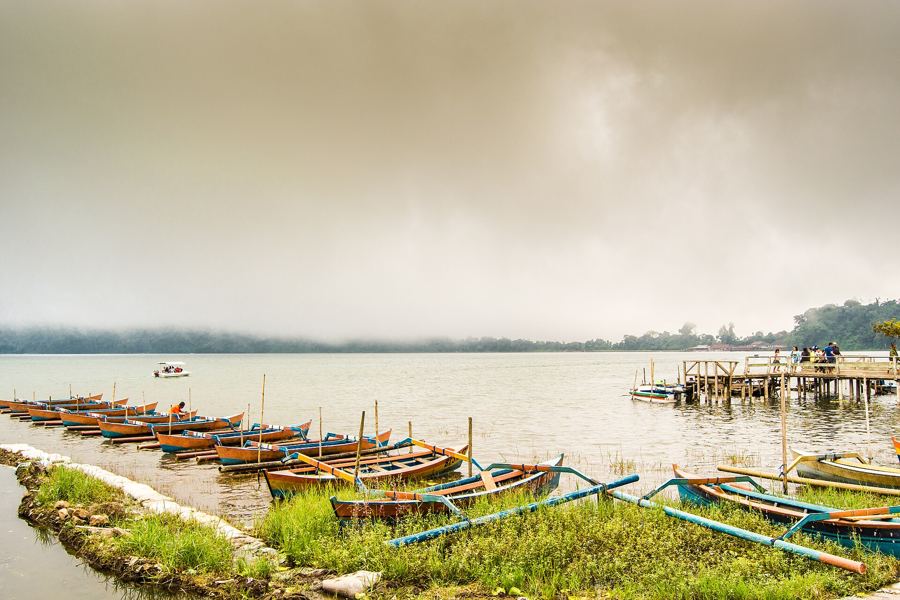
Munduk is only a short drive from Lake Tamblingan, where the forest runs down to the water and local people still use small dugout canoes. A slow morning on or beside this lake pairs well with a waterfall walk the next day. The bigger lake of Bratan and its famous water temple are further along the same road; the guide to Lake Bratan and the highland temples covers that side of the caldera.
Doing it slowly
Munduk is easy to rush: many day tours stop for one waterfall and drive on. Stay at least two nights instead. On the first morning walk to one fall and come back by lunch. On the second take a longer loop, or go to Tamblingan. In the afternoons, sit on a veranda with a pot of local coffee and watch the valley disappear and reappear in the cloud.
Evenings are quiet. There is little to do after dark, and that is part of the point. Bring a book and go to bed early, so you are up when the morning is clear.
Getting there and around
The usual route from the south climbs to Bedugul and then follows the ridge road past the twin lakes before dropping to Munduk. It is a winding mountain road with steep drops, frequent fog and, in places, a rough surface. If you are not used to such roads, travel with a driver rather than on a rented scooter, and avoid driving after dark. The notes on getting around without the stress apply doubly here.
Within the village everything is walkable, though rarely flat. Carry some cash: entrance fees to waterfalls are usually collected locally, and cards are not always accepted. Fees and access arrangements change, so ask before you set out.
The people who took these pictures are thanked by name, with their licences, in Photographs and thanks.