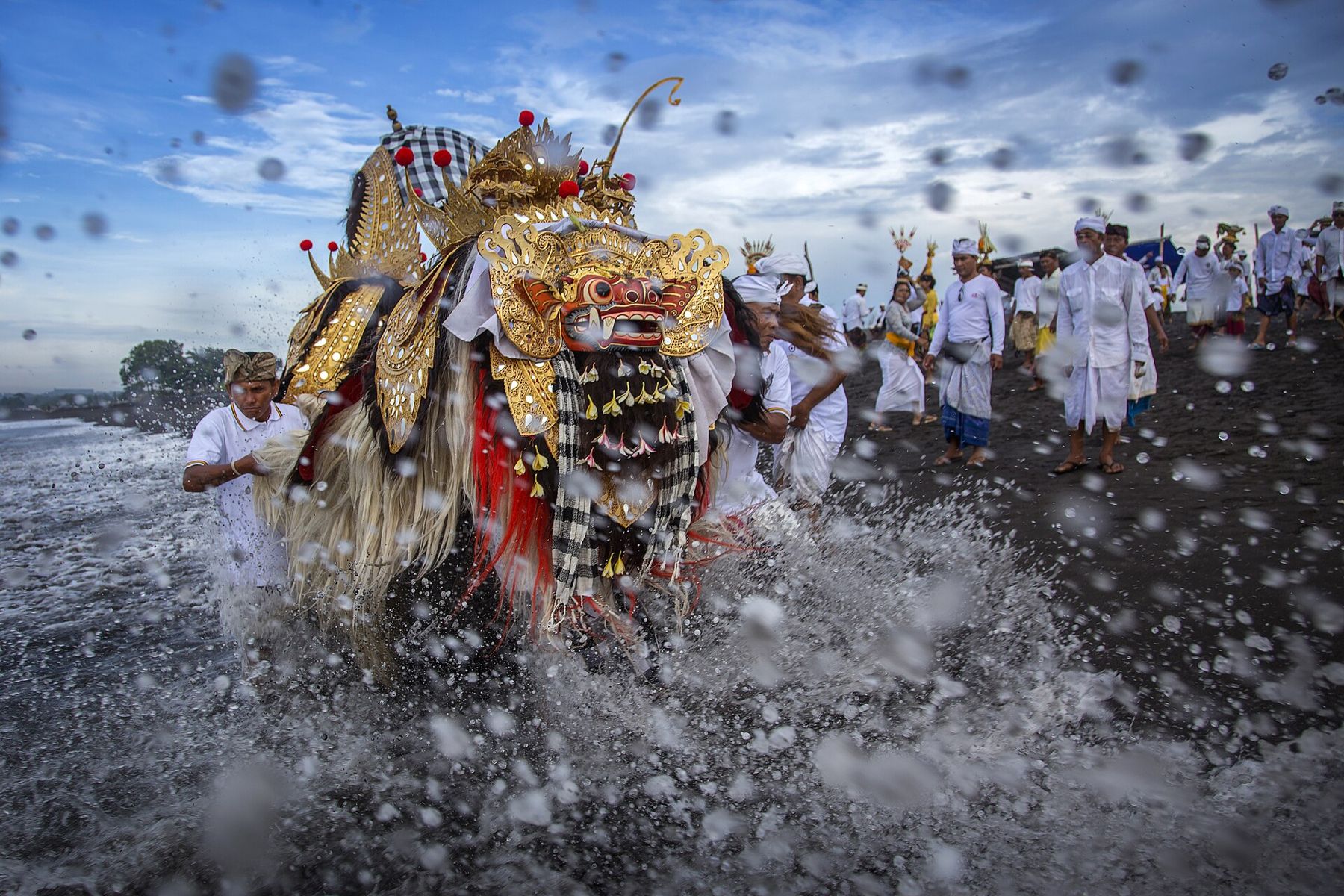
On the eve of Nyepi the streets of Bali are full of noise. Drums and cymbals clash, crowds gather at crossroads, and huge demon figures made of bamboo and paper are carried through the dark, spun round at every junction. Then, at six the next morning, everything stops. For twenty-four hours there are no cars on the roads, no planes in the sky, no lights in the windows and almost no sound at all, except birds, dogs and the sea.
Nyepi is the Balinese Hindu New Year in the Saka calendar, and it is like nothing else on the island. If your trip overlaps with it, you will not be able to go anywhere for a day. Most visitors who have spent it here would not change that.
When Nyepi falls
Nyepi follows a lunar calendar, so its date moves each year. It falls on the day after the dark moon of the ninth Balinese month, which usually places it in March, occasionally in early April. The exact date is announced well in advance, and it is worth checking before you book flights, because the airport closes for the whole day.
Plan the practical side early. Flights that would land or leave on Nyepi do not operate, boats to and from the island stop, and most ordinary shops and stalls close. Arrive at least a day before, and do not schedule a departure for the morning after without leaving some margin. Many places to stay prepare simple meals for guests on the day itself, but ask in advance what they will offer, and stock up on water, fruit and snacks the day before, when markets are busy with Balinese families doing the same.
The days around it form a sequence of rites. Each is part of the same idea: cleanse, drive away what is harmful, sit in stillness, and begin again.
Melasti, at the water
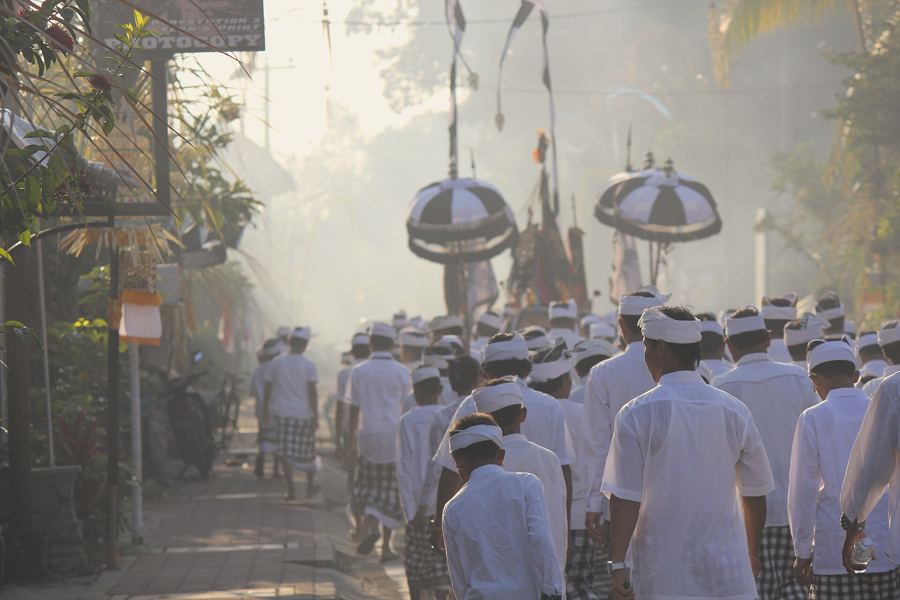
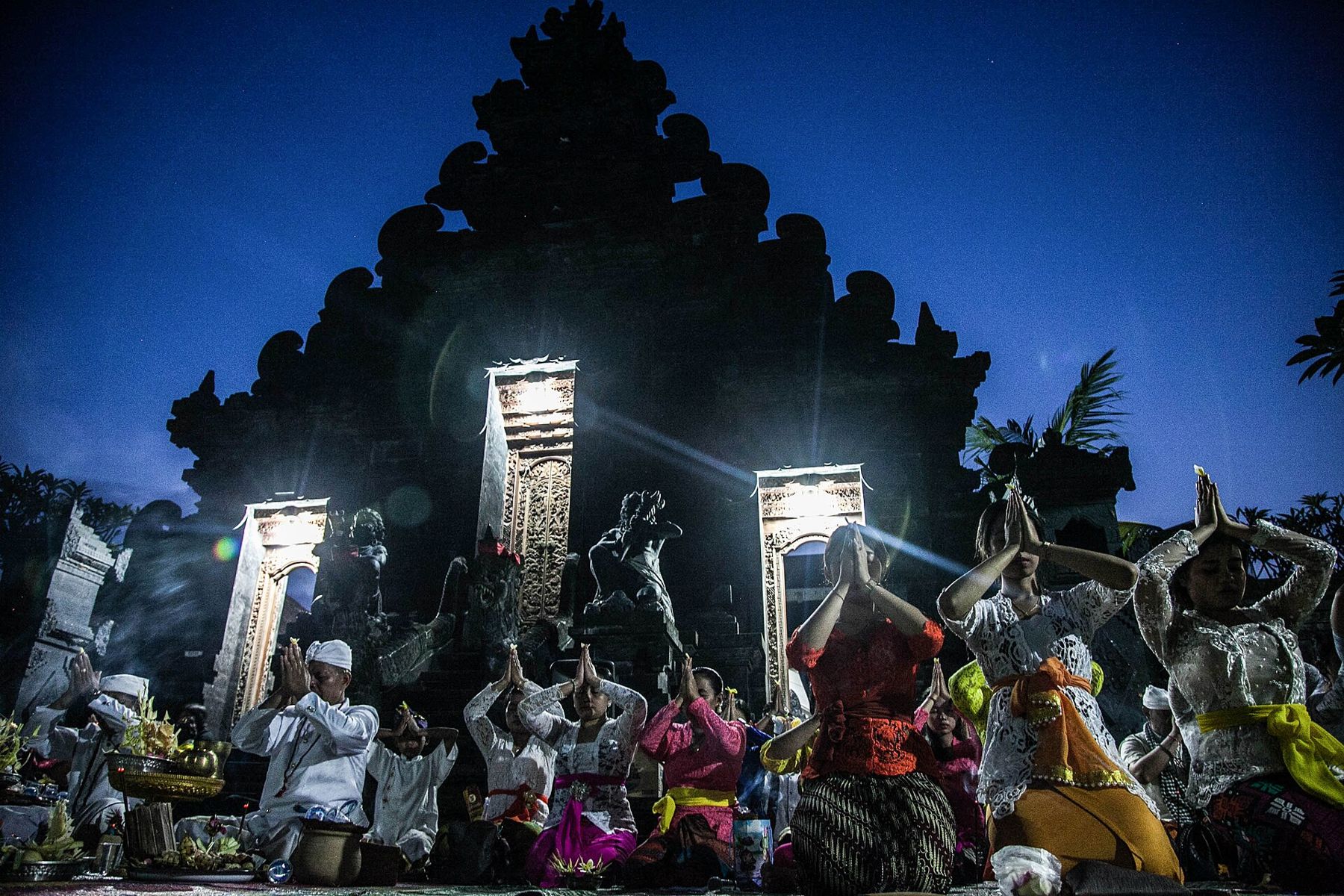
In the days before Nyepi, communities across the island carry sacred objects from their temples to the sea, a lake or a spring to be purified. This is Melasti. Long processions of people dressed in white walk to the shore under tall ceremonial umbrellas, bearing offerings, shrines and the masks and figures that live in the village temples.
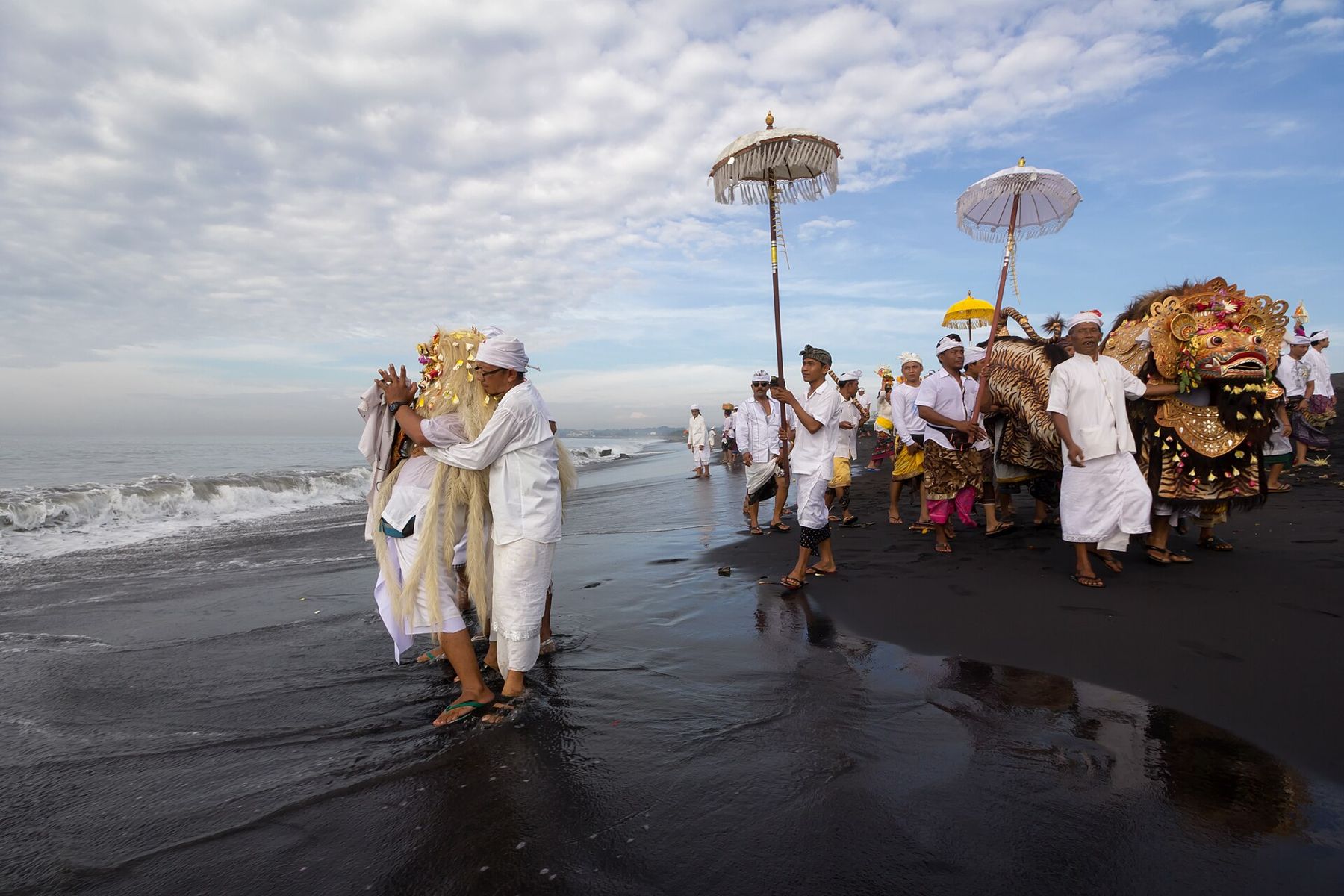
At the water's edge, priests bless the objects and the people, and holy water is sprinkled and carried back. On some beaches a barong, the great lion-like protector figure, is carried into the surf. If you come across a Melasti, watch from a respectful distance. Do not walk through the procession or block the path to the water, and keep any photographs discreet.
The eve: ogoh-ogoh
The day before Nyepi is the time of Tawur Kesanga, sacrifices and offerings at crossroads meant to appease the negative forces. As evening falls comes Pengerupukan, when households make noise, light torches and sweep the compound to drive out unwelcome spirits.
The ogoh-ogoh are the most famous part. These giant effigies, often of demons and fearsome creatures, are built over weeks by the young people of each banjar, the local community association. On the eve they are carried through the streets on bamboo frames, swung and spun at junctions to confuse the spirits, and in many places burned or broken up afterwards. The parades are a relatively recent addition to the old rites, and they have grown into one of the most spirited nights of the year.
Find a place by the roadside early, stand back from the moving frames, and follow the crowd's lead. Head home well before midnight, so you are in place before the silence begins.
 Another courseGalungan and the penjor
The day of silence
From six in the morning on Nyepi until six the next morning, Balinese Hindus observe four restraints, together called Catur Brata Penyepian:
- Amati geni: no fire or light, which today includes electric lights.
- Amati karya: no work.
- Amati lelungan: no travel.
- Amati lelanguan: no entertainment or pleasure-seeking.
Many people also fast and spend the day in reflection. The island's airport closes, sea crossings stop and the streets empty. Traditional village guards, called pecalang, walk the roads to make sure the day is kept. Emergency services continue.
Without traffic you hear the island properly for perhaps the first time.
Visitors are not expected to fast or pray, but everyone on the island is expected to respect the day. In practice that means:
- Stay inside the place where you are staying for the whole day; do not go out on the street or the beach.
- Keep noise low and lights dim, and draw curtains after dark.
- Have food and water ready from the day before; most places run a reduced service.
- Do not plan any travel, and expect no transport at all.
In recent years mobile internet has sometimes been switched off across the island for the day. Arrangements vary, so check the plans for your year and assume you may be offline.
The silence is the gift. Without traffic you hear the island properly for perhaps the first time. At night, with almost every light out, the stars above Bali are extraordinary. Spend the day slowly: read, sleep, sit outside in the shade, and let it be the quietest day of your trip.
Nyepi beyond Bali
Nyepi is a national public holiday in Indonesia, and Hindu communities elsewhere in the country mark it too, with their own processions and prayers. Only on Bali, though, does a whole island fall silent.
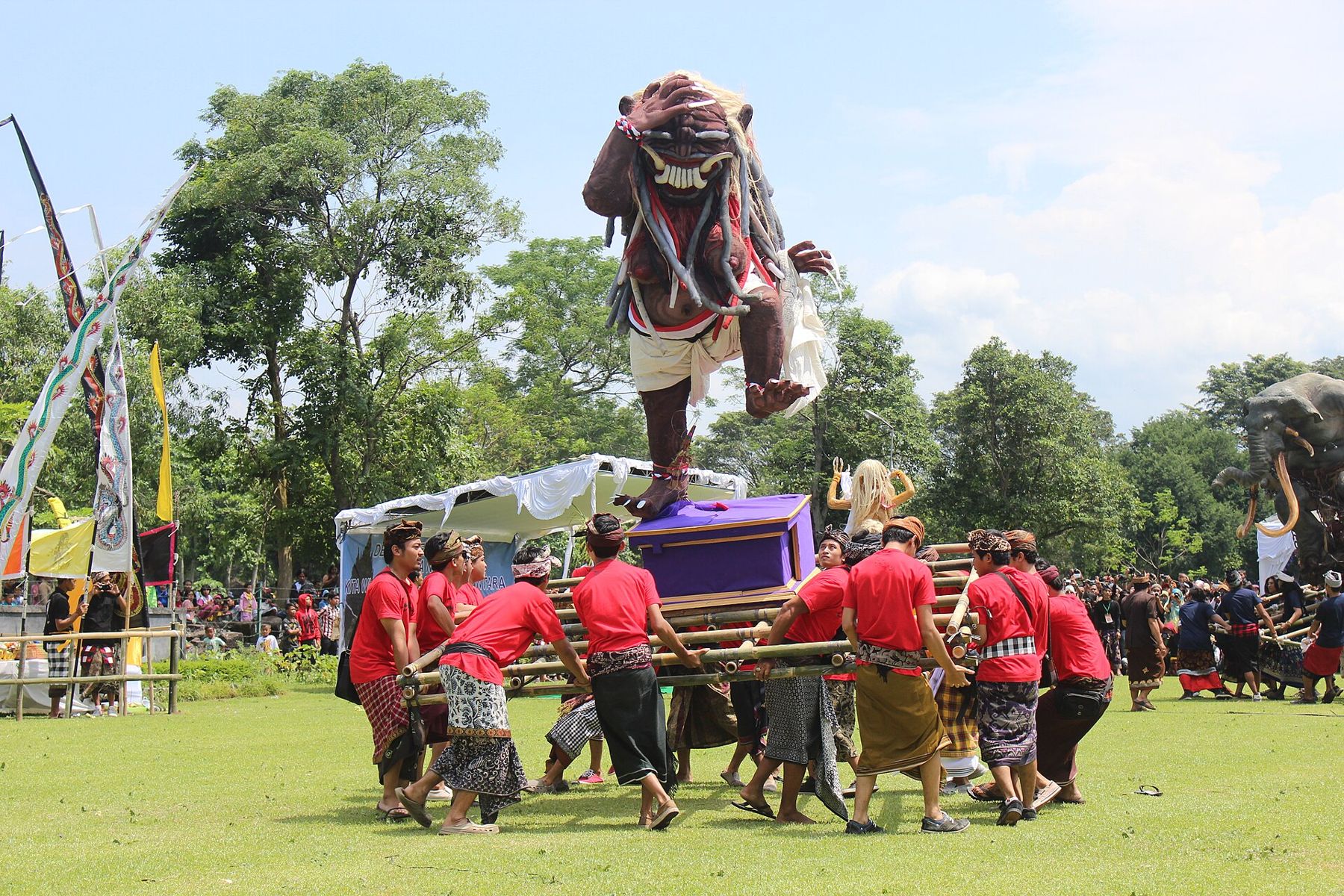
In Java and Sumatra, temples fill for prayer and ogoh-ogoh are paraded, but life outside continues around them. The full stillness, with roads closed and flights grounded, is a Balinese experience.
The day after
The morning after Nyepi is Ngembak Geni, when the fire is lit again. Families visit one another, ask forgiveness for the past year and share food. The mood is gentle and warm. In one Denpasar neighbourhood, Sesetan, young people take part in a lively ritual called omed-omedan, a traditional push and pull between two groups.
Roads reopen, the airport comes back to life and the island slowly picks up its pace. If you can, keep your own pace low for one more day. Beaches and roads are quieter than usual for a while, and the island seems to wake slowly, as though reluctant to give up the stillness. Ceremonies continue, and other festivals such as Galungan bring their own beauty; the piece on Galungan and the penjor describes that festival. For the basics of visiting temples respectfully at any time, read temple etiquette and what to wear, and for timing journeys around festival closures, see getting around without the stress.
The people who took these pictures are thanked by name, with their licences, in Photographs and thanks.