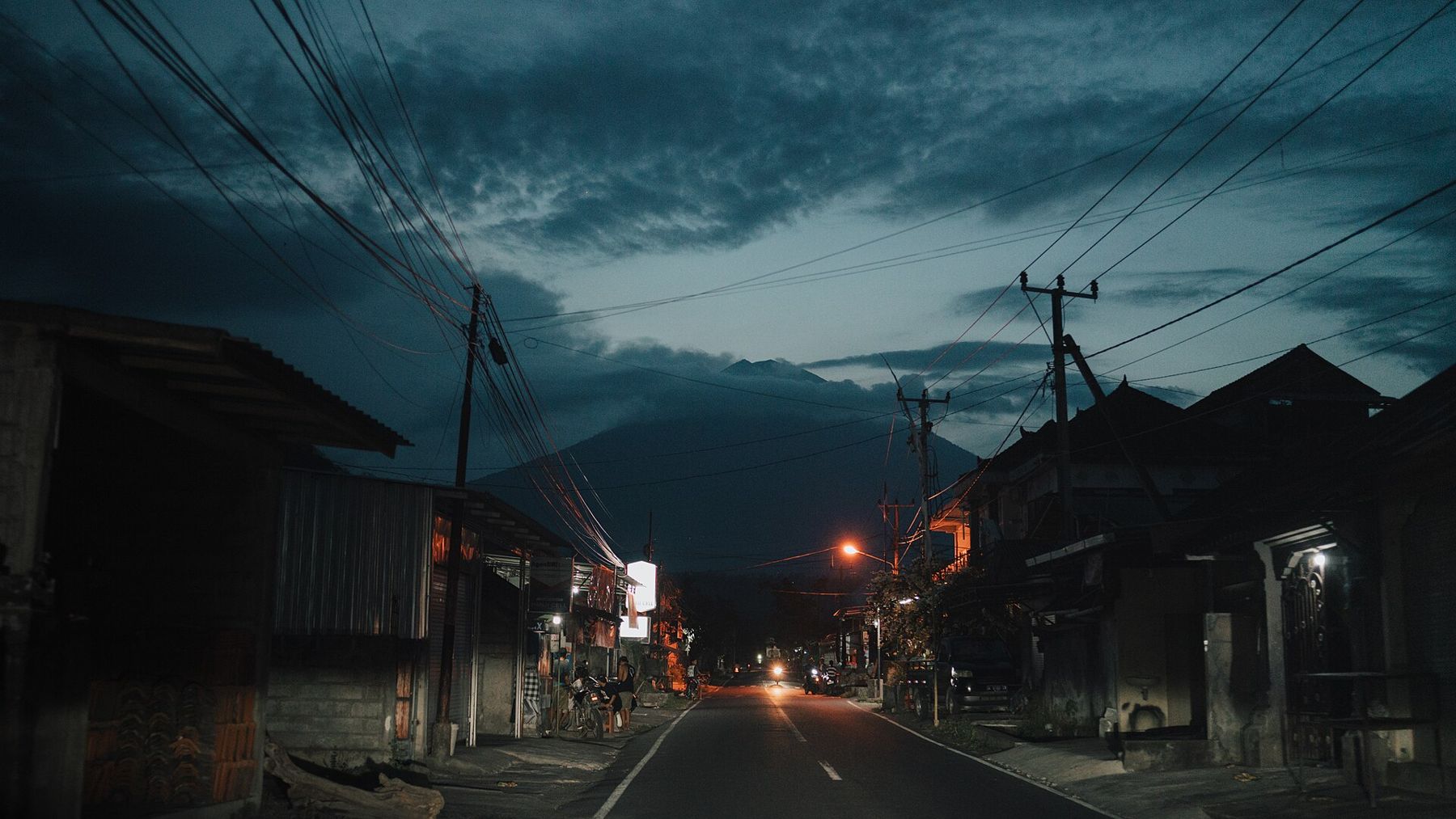
Amed is not one village but a string of them, strung along the coast road of Karangasem in Bali's far east. The beaches are dark, made of volcanic sand and smooth grey stones, and the bays are lined with jukung, the slim outrigger fishing boats painted in bright colours and pulled up on the shore. Above it all, when the cloud allows, stands Mount Agung, the island's highest and most sacred mountain.
This is a coast for people who like small days. There is no grand sight to tick off. There is the sea, a reef close to the shore, a morning market of fish, and a long view of a volcano. The pleasure is in the repetition.
The boats at first light
Fishermen in Amed still go out before dawn in jukung, the narrow wooden hulls balanced by two bamboo outriggers. Many carry a small triangular sail as well as an outboard engine. If you are on the beach in the half dark, you will see them coming back one by one, low in the water, the crew lifting the catch onto the stones.
Sit a little way back. This is work, not a show, and the boats need room to land. Within an hour most are lined up again on the sand, and the beach goes quiet. The light at this hour is soft and pink, and the sea is usually at its calmest.
Salt from the sea
Amed has a long tradition of making salt by hand. Seawater is carried up the beach, spread to dry in the sun, and the crystals are collected and finished in hollowed palm trunks. The work depends on dry weather and fewer families do it than before, but in the dry months you may see the shallow beds and wooden troughs near the shore. Ask before you walk among them; they are someone's livelihood.
Snorkelling the reef from the shore
Much of Amed's coral sits close enough to swim to from the beach. Jemeluk Bay is the best known spot, with a slope of coral and plenty of reef fish in clear water when the sea is calm. Further along, at Banyuning, a small sunken boat known locally as the Japanese wreck lies in shallow water a short swim from the shore. It is heavily encrusted and easy to see with only a mask and snorkel.
To do this well:
- Swim in the morning, before the wind picks up and the water clouds.
- Wear reef shoes for the stony entry and never stand on coral.
- Ask on the beach about currents that day. Conditions change between bays and between hours, and local advice is worth more than a map.
- Use a mineral sunscreen or a rash vest, and keep your fins well above the reef.
Divers come here for good reason, and a short drive north at Tulamben the wreck of the USAT Liberty, a cargo ship sunk during the Second World War, lies just off a stony beach. If you are not a diver, snorkelling over its shallower parts is possible in calm conditions, but go with someone who knows the site.
The pleasure of Amed is in the repetition: the same bay, the same boats, a slightly different light each morning.
The pleasure of Amed is in the repetition: the same bay, the same boats, a slightly different light each morning. A week of mornings here can feel longer and fuller than a fortnight of excursions.
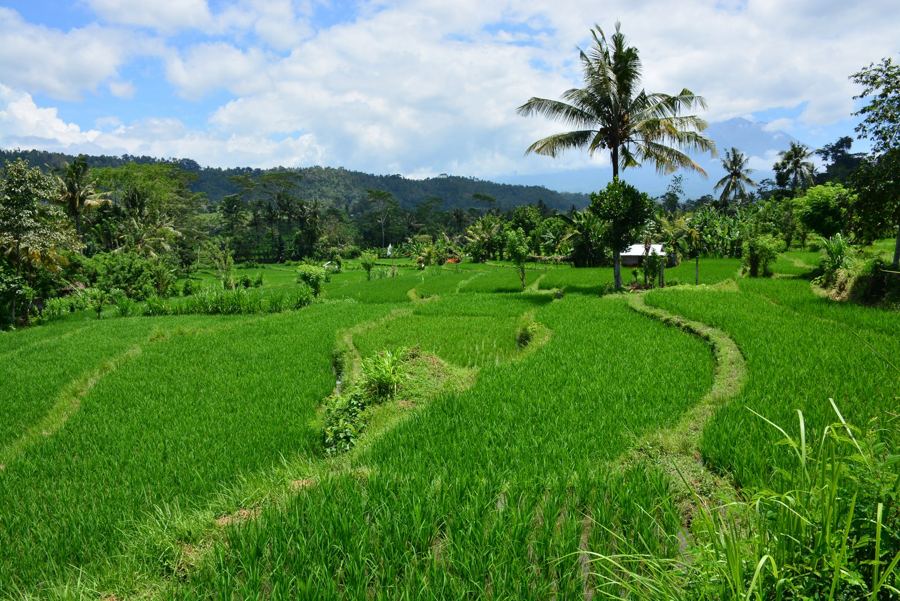 Another courseSidemen, the valley that stayed slow
Living with the volcano
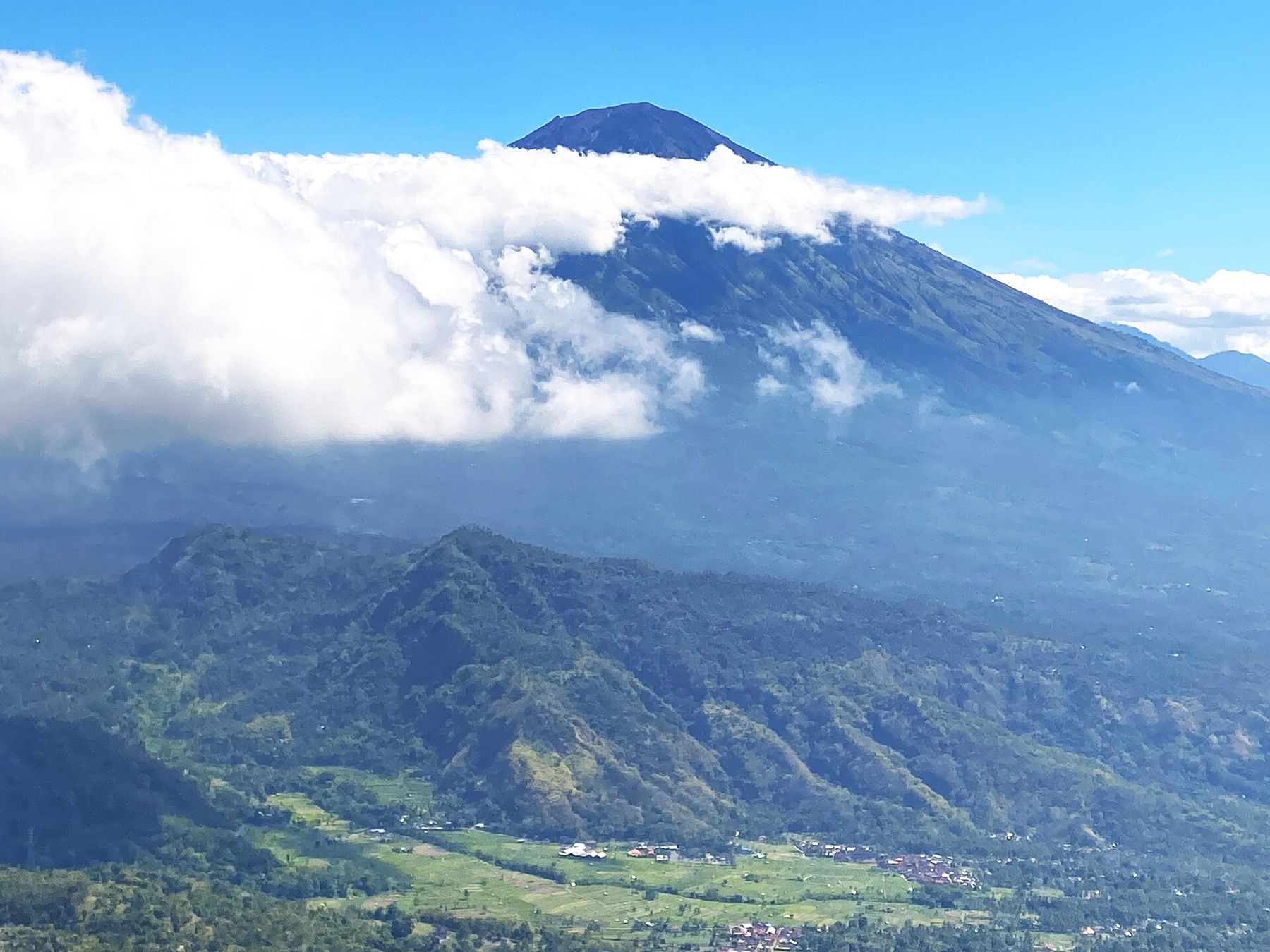
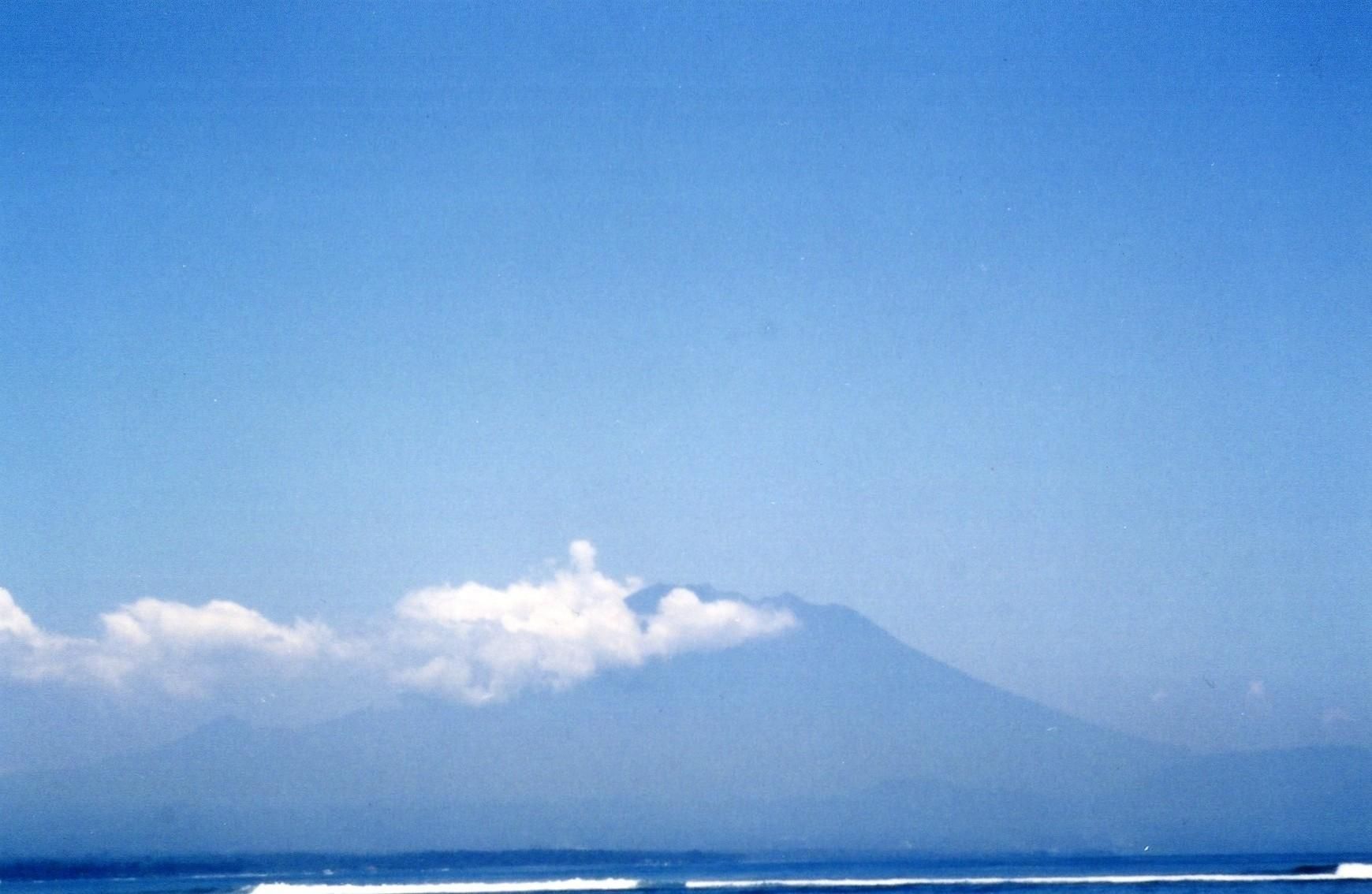
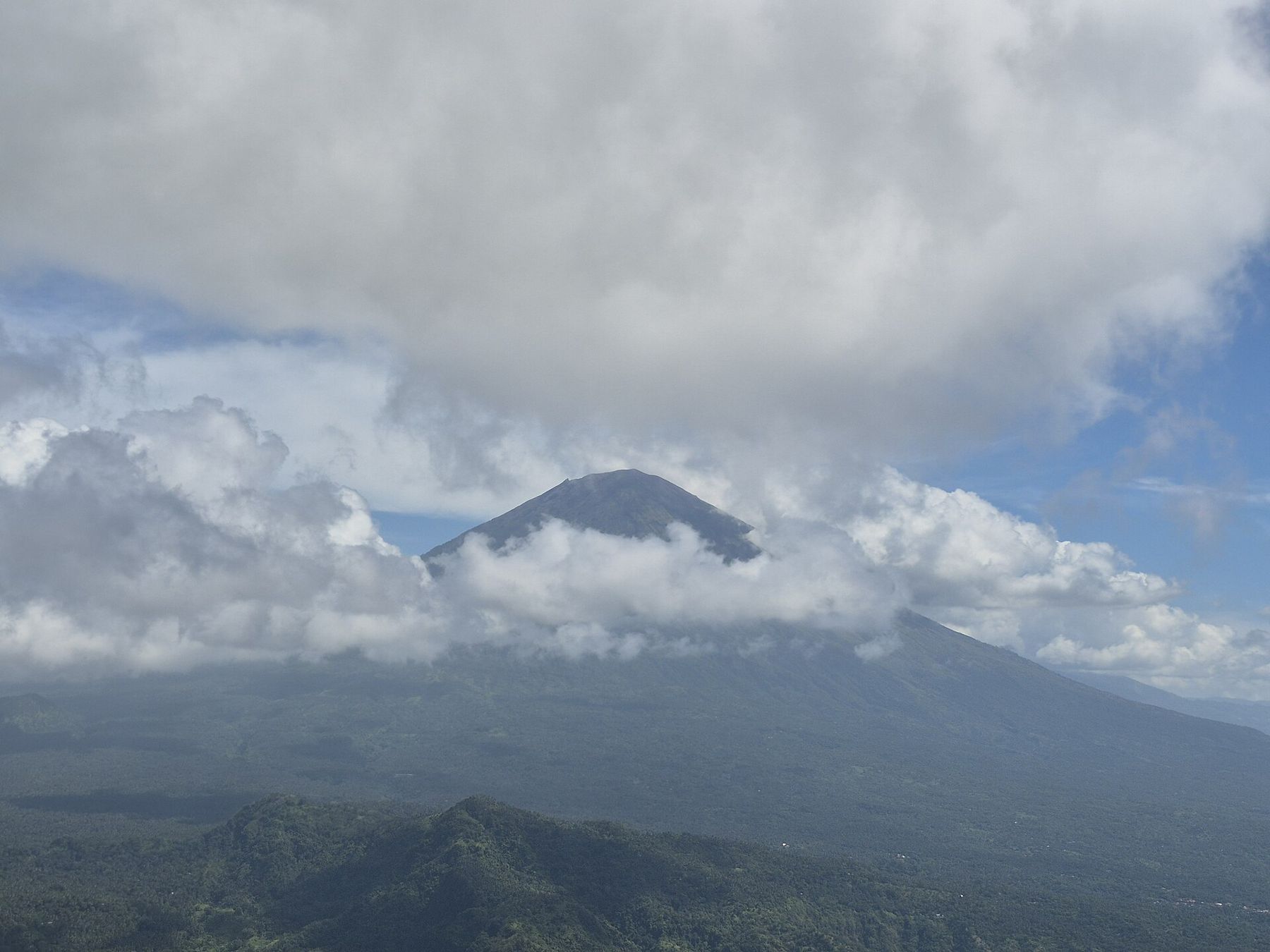
Mount Agung is the spiritual centre of Bali. The mother temple, Pura Besakih, sits on its slopes, and the mountain is the reference point for the whole island: in Balinese orientation, kaja, the direction towards the mountain, is the pure and sacred one. From Amed you see it from the north east, a long clean cone that is often clear at dawn and wrapped in cloud by late morning.
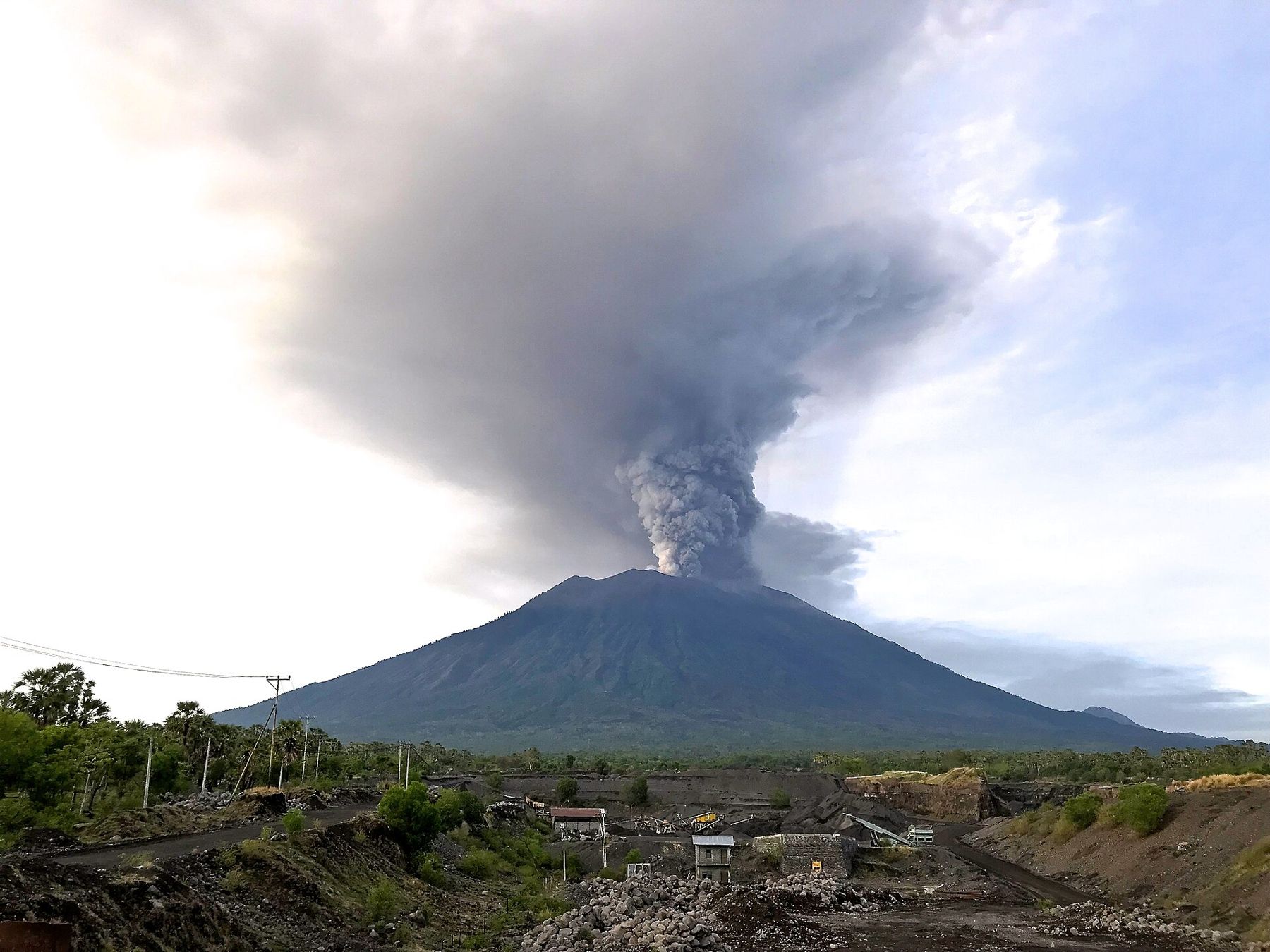
Agung is an active volcano. It erupted in 1963 with great loss of life, and it erupted again in 2017, when an exclusion zone was set up around the summit and flights at the island's airport were disrupted for some days. The mountain has been calmer since, but the alert level can change. Before you travel east, check the current status with the Indonesian volcano authorities and follow any exclusion zone without exception.
Next to Agung, to the east, rises Mount Lempuyang, an old and deeply eroded volcano covered in forest. On its slopes is Pura Lempuyang Luhur, one of Bali's most important temples, reached by a very long flight of steps. Many visitors now go only for the photograph of the split gate at the lower temple, and the queues can be long. If you go, go as a pilgrim would: early, properly dressed in sarong and sash, and willing to climb further than the gate.
How the day falls
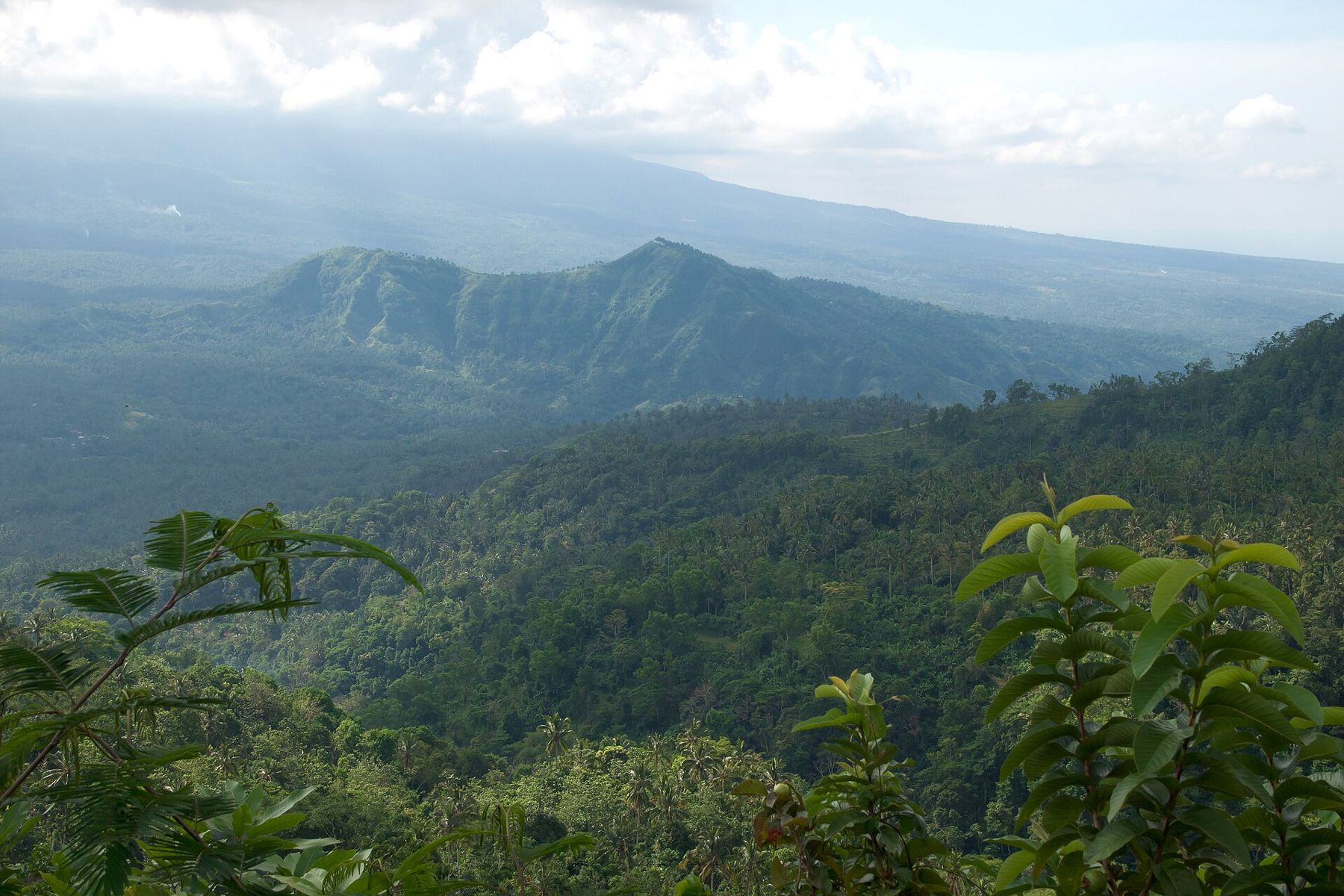
The east of Bali is drier than the south and the centre, and from roughly April to October the sea is often calm and the sky clear in the mornings. In the wet months there are still bright mornings, but the sea can be rougher and the visibility lower. Midday is hot on any coast, and the dark sand holds the heat.
A slow day might look like this:
- Before six, the boats coming in, and a first swim while the water is flat.
- Mid morning, a longer snorkel at Jemeluk or Banyuning.
- Midday, shade, sleep and reading.
- Late afternoon, a walk along the coast road to a viewpoint over the bays.
- Dusk, Agung turning dark against the sky.
The coast road is narrow and winds over headlands with steep drops. Walk on the inside, take care on blind bends, and if you hire a scooter, read the notes on getting around without stress first; this is not a road to learn on.
Being a good guest in a fishing village
Amed has grown, but it is still a place where families fish, farm and keep their temples. A few things help:
- Dress modestly away from the beach. A sarong over swimwear is easy.
- Step around the small offerings, canang sari, placed on the ground and on boats each morning. If you are unsure, look at the temple etiquette and what to wear notes.
- Do not touch or climb on the boats.
- Take your rubbish with you. Waste collection on this coast is limited.
Village ceremonies happen often, and you may meet a procession on the road with gamelan and offerings carried on heads. Pull over, wait, and let it pass. On the island's great festival days, such as Galungan and the penjor season, the coast road is lined with tall bamboo poles.
Arriving and staying
The drive from the south of the island takes several hours, depending heavily on traffic, and the last stretch winds along the coast. Many travellers break the journey in Sidemen or near Candidasa. Accommodation in Amed ranges from simple guesthouses to small hotels on the slopes; choose somewhere you can walk to the water from, so the early swim needs no planning.
Give it at least three nights. The first day you will still be arriving. By the second morning you will know the sound of the boats, and by the third the volcano will feel like a neighbour.
The people who took these pictures are thanked by name, with their licences, in Photographs and thanks.