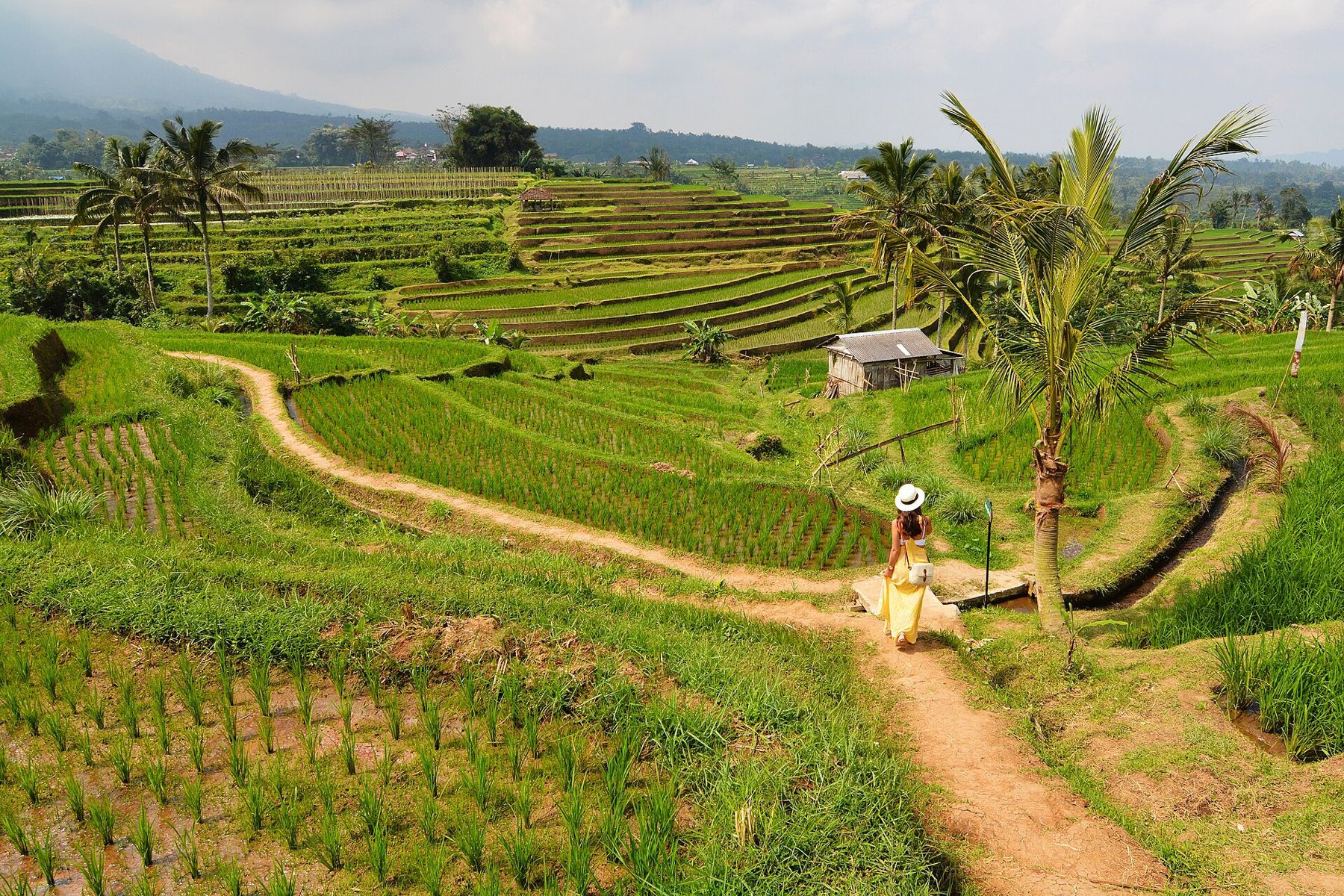
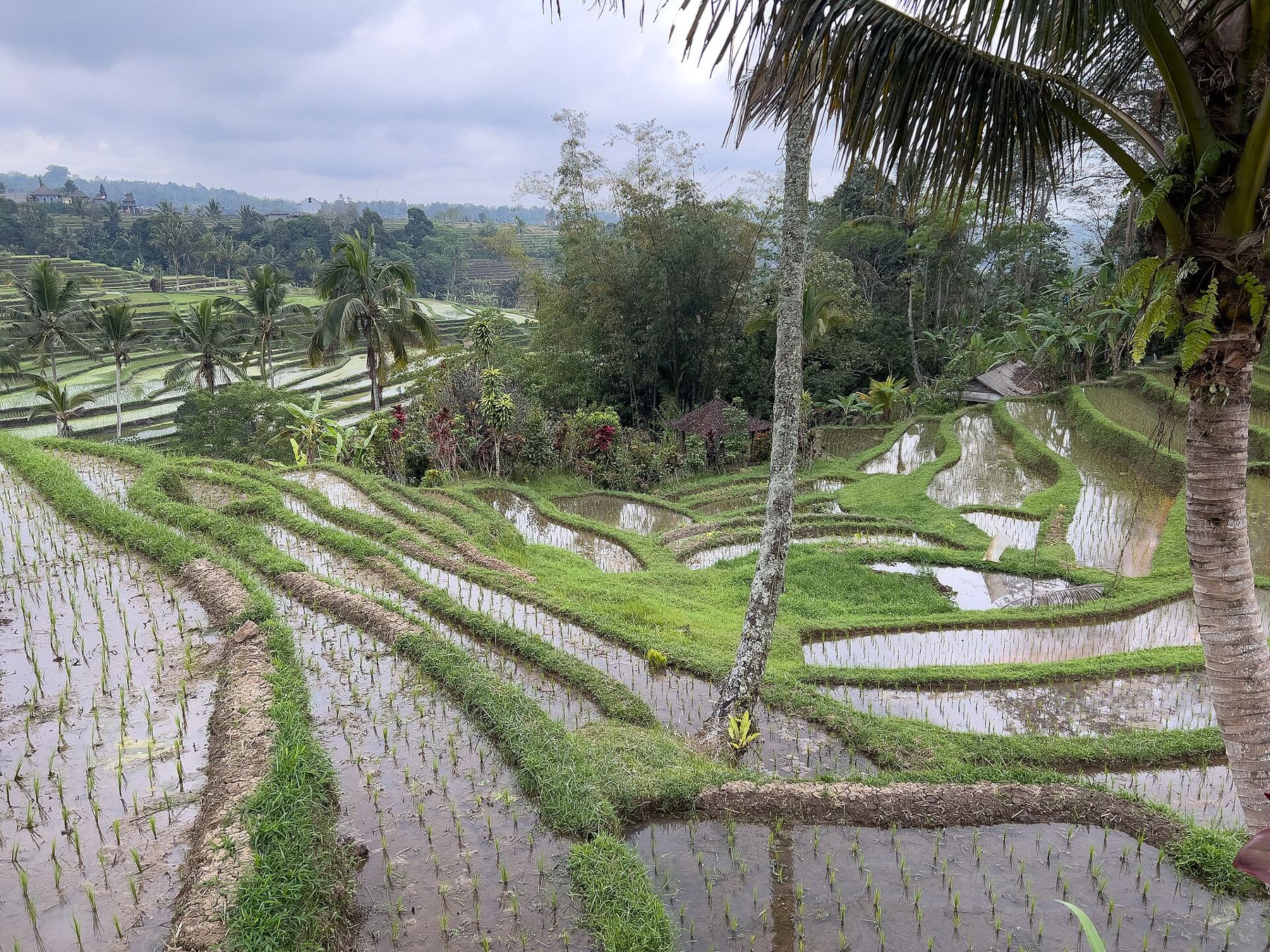
Look closely at any rice terrace in Bali and you will find water moving. It runs in narrow channels along the bunds, slips through notches in the earth walls and drops from one field to the next. Somewhere upstream, a small shrine stands where the water enters the fields. This is the subak at work: the way Balinese farmers have shared water, labour and ritual for more than a thousand years.
What the subak is
A subak is a community of farmers who draw water from the same source, whether a spring, a river weir or a canal. Its members meet to decide when each field is flooded and drained, when to plant and when to harvest, and how to keep the canals and tunnels in repair. Each subak has an elected leader, often called the pekaseh, and its own written rules.
The physical works are remarkable. Water is diverted from rivers at weirs, carried along hillsides in canals and sometimes through tunnels cut by hand through rock, then divided at small dividers of stone or concrete so that each block of fields receives its fair share. Farmers keep these channels clear themselves, often working together on set days.
The subak is not only a matter of engineering. Each has its own temples and ceremonies, and the farmers make offerings at every stage of the rice cycle. Water is understood as a gift, and sharing it fairly is both a practical and a religious duty.
Tri Hita Karana
Behind the subak lies a Balinese philosophy called Tri Hita Karana, often translated as the three causes of wellbeing: harmony between people and the divine, between people and one another, and between people and nature. In the fields, this means that water is managed through the temples, decided together by the farmers, and used with respect for the land.
In 2012, UNESCO inscribed the Cultural Landscape of Bali Province on the World Heritage List, recognising the subak as a living expression of this philosophy. The listed area includes Lake Batur and its supreme water temple, Pura Ulun Danu Batur, the terraced landscape around Jatiluwih on the slopes of Mount Batukaru, the Pakerisan river valley with Tirta Empul and Gunung Kawi, and the royal temple of Taman Ayun at Mengwi.
Water temples
Water temples sit at points that matter to the flow: at lakes, springs, weirs and the heads of canals. Many subak share a regional temple upstream, and the largest of all are linked to the crater lakes in the mountains. Through ceremonies held at these temples, neighbouring subak have long coordinated their planting and fallow periods.
This coordination matters. When fields across a whole area are left fallow or flooded at the same time, pests lose their food and their habitat, and water is spread fairly between upstream and downstream farmers. In the late twentieth century, efforts to push continuous planting with new rice varieties disrupted these patterns and led to pest and water problems in places, and the value of the old schedules became much clearer.
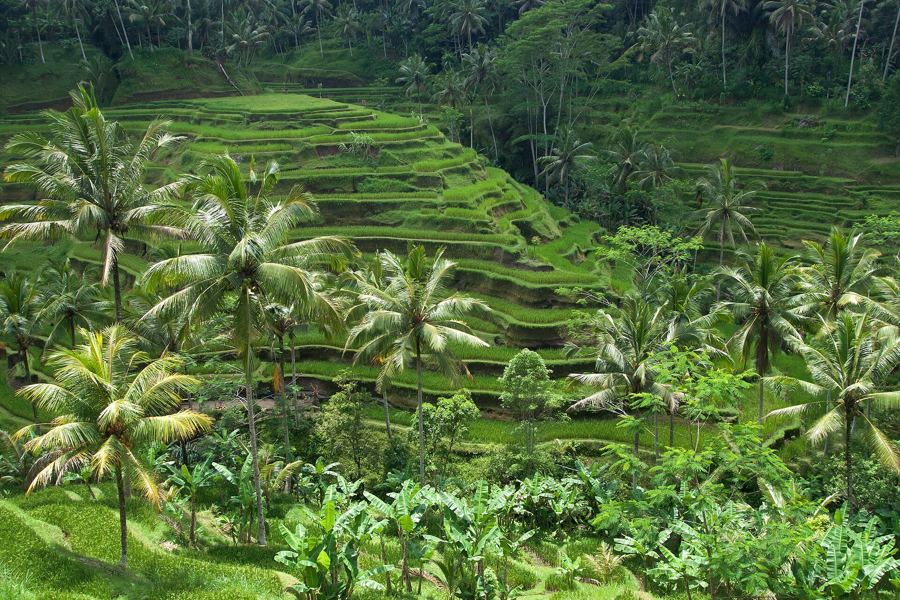 Another courseUbud's rice terraces at first light
Jatiluwih
The terraces of Jatiluwih, in the Tabanan regency in the west of the island, are the best place to see the subak landscape at scale. The fields roll across the lower slopes of Mount Batukaru in wide curves, cut by streams and stands of forest. Some farmers still grow traditional varieties, including red rice.
Marked walking routes run through the fields, and an entrance fee helps support the farmers and the area; check current arrangements before you go. Walk early, before the heat and the tour buses, keep to the paths, and remember that these are working fields. A slow walk here makes a fine companion to the busier terraces near Ubud described in Ubud's rice terraces at first light.
Taman Ayun
Pura Taman Ayun at Mengwi was built in the seventeenth century as the royal temple of the Mengwi kingdom. It is surrounded by a wide moat and set in gardens, and its tiered meru shrines rise above the inner courtyard. Its place in the UNESCO listing reflects the role of royal temples in the island's water management.
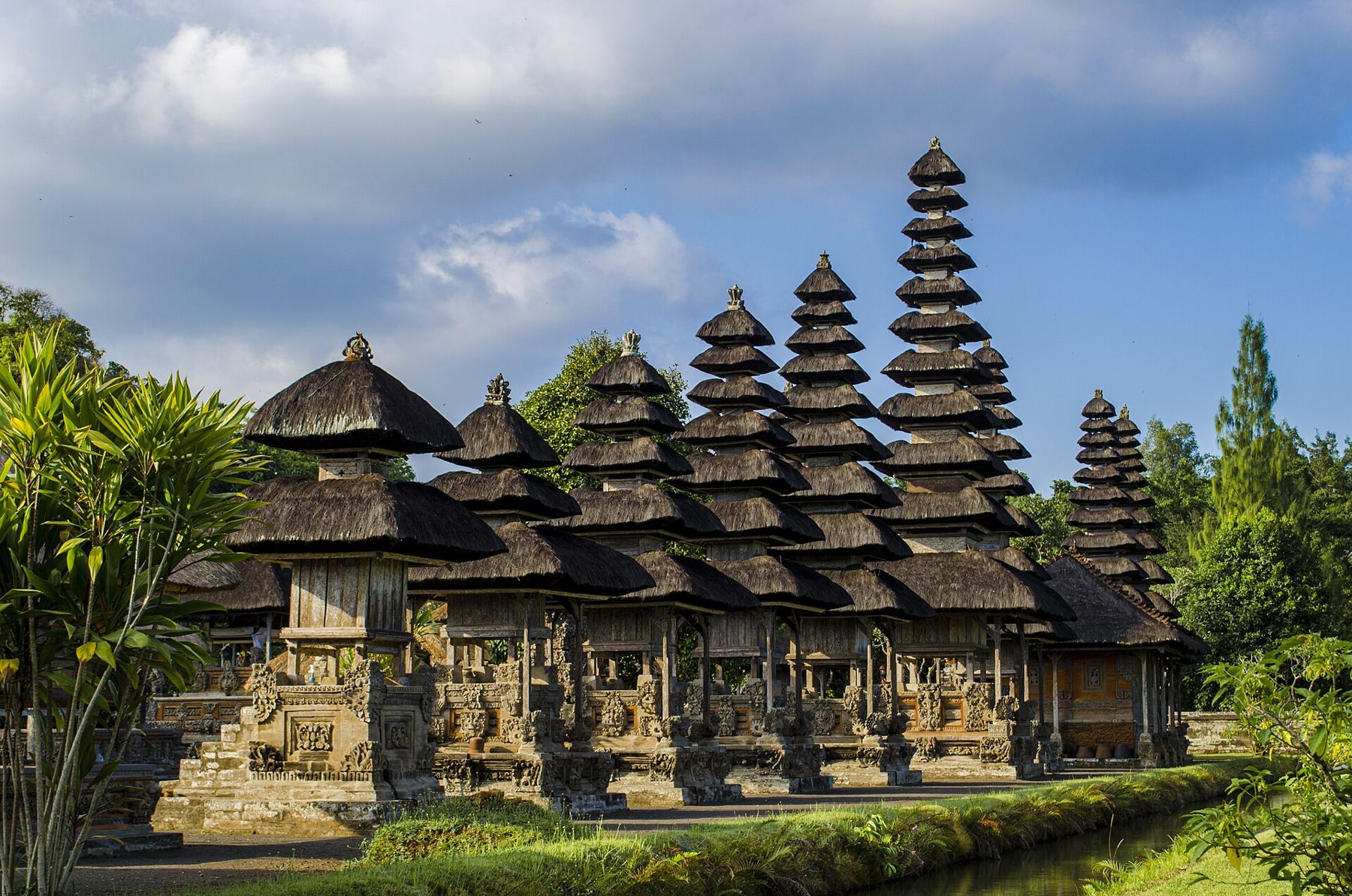
Visitors walk around the outer grounds and look into the inner courtyard from its wall. The usual temple customs apply: sarong and sash, quiet voices, and respect for any ceremony under way. The guide to temple etiquette and what to wear covers the basics.
A living system under pressure
The subak faces real challenges. Farmland near towns and tourist areas is being converted to buildings, water is drawn off for hotels and homes, and fewer young people want to farm. Rice farming is hard work for modest returns, and the terraces survive only if farmers can make a living from them.
Visitors can help a little. Pay entrance fees and donations without bargaining, buy rice and produce grown locally, stay on the paths, and never take water, flowers or offerings from the fields. The Pakerisan valley is another place to see the system at work; read about Tirta Empul's holy spring before you go.
Seeing it for yourself
You do not need to visit a listed site to see the subak. Walk any rice field and follow the water upstream: to the shrine at the field's inlet, to the canal, to the weir and the temple beside it. Once you notice how carefully the water is shared, the terraces stop looking like scenery and start looking like what they are, the patient work of generations.
The people who took these pictures are thanked by name, with their licences, in Photographs and thanks.