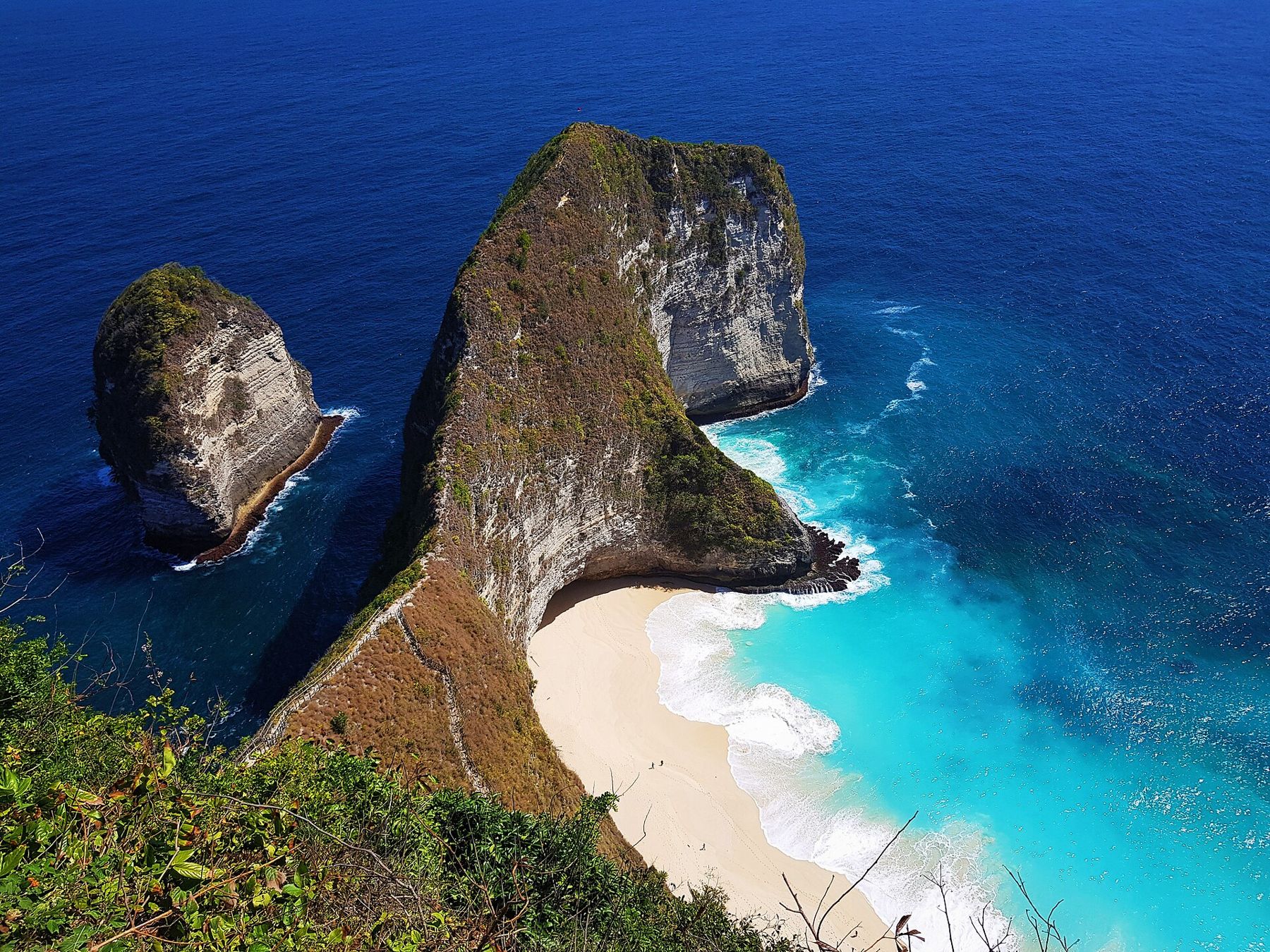
Nusa Penida lies south east of Bali across the Badung Strait, part of Klungkung regency along with its smaller neighbours Nusa Lembongan and Nusa Ceningan. It is dry, hilly limestone country, with sheer white cliffs dropping into deep blue water. The views from the clifftops are famous, and in recent years the number of visitors has grown quickly.
That growth has brought crowded viewpoints, busy roads and, sadly, accidents. None of that is a reason to stay away. It is a reason to go slowly, stay longer than a day, and take the island on its own terms.
The crossing
Most visitors cross by fast boat from Sanur, landing on the beach or a jetty on the island's north coast. The crossing is short, but the strait can be rough, and landings often mean stepping off the boat into shallow water. Keep your bag small and your phone in a dry pouch. If you get seasick, take something before you board.
Boats are cancelled when the sea is too rough, and it is sensible to choose operators that carry life jackets for every passenger and do not overload. Allow a spare day at the end of your trip in case the weather keeps you on the island. If you are staying in Sanur first, arriving gently in Sanur makes an easy start.
The roads
Penida's roads have improved, but many are still narrow, steep and patched, with sharp bends, loose gravel and broken edges. The routes to the best-known viewpoints are crowded with scooters and cars at peak hours. Visitors with little experience on a scooter are injured here every year.
The calmer choice is to hire a car with a local driver for the days you want to explore. Drivers know which roads are passable and when to go. If you do ride, wear a helmet, ride slowly, and do not ride at night.
Kelingking and the cliff edges
Kelingking is the headland whose shape reminds many people of a dinosaur's head, curving out above a white beach far below. The view from the top is extraordinary. A steep path runs down the spine of the headland to the beach, partly on rough steps, partly on loose rock with handrails in places.
Be honest with yourself before attempting the descent. It is a hard climb, especially back up in the heat, and it is not for anyone uneasy with heights or without proper shoes. The beach at the bottom has powerful waves and currents; swimming there is dangerous. Many people are content with the view from the top, and that is a fine choice.
 Another courseAmed's black-sand mornings
At every cliff on the island:
- Stay behind barriers and well back from unfenced edges. Limestone can crumble.
- Never step out for a photograph. No picture is worth it.
- Keep children close and in hand.
- Go early in the morning, before the heat and the crowds.
Broken Beach and Angel's Billabong
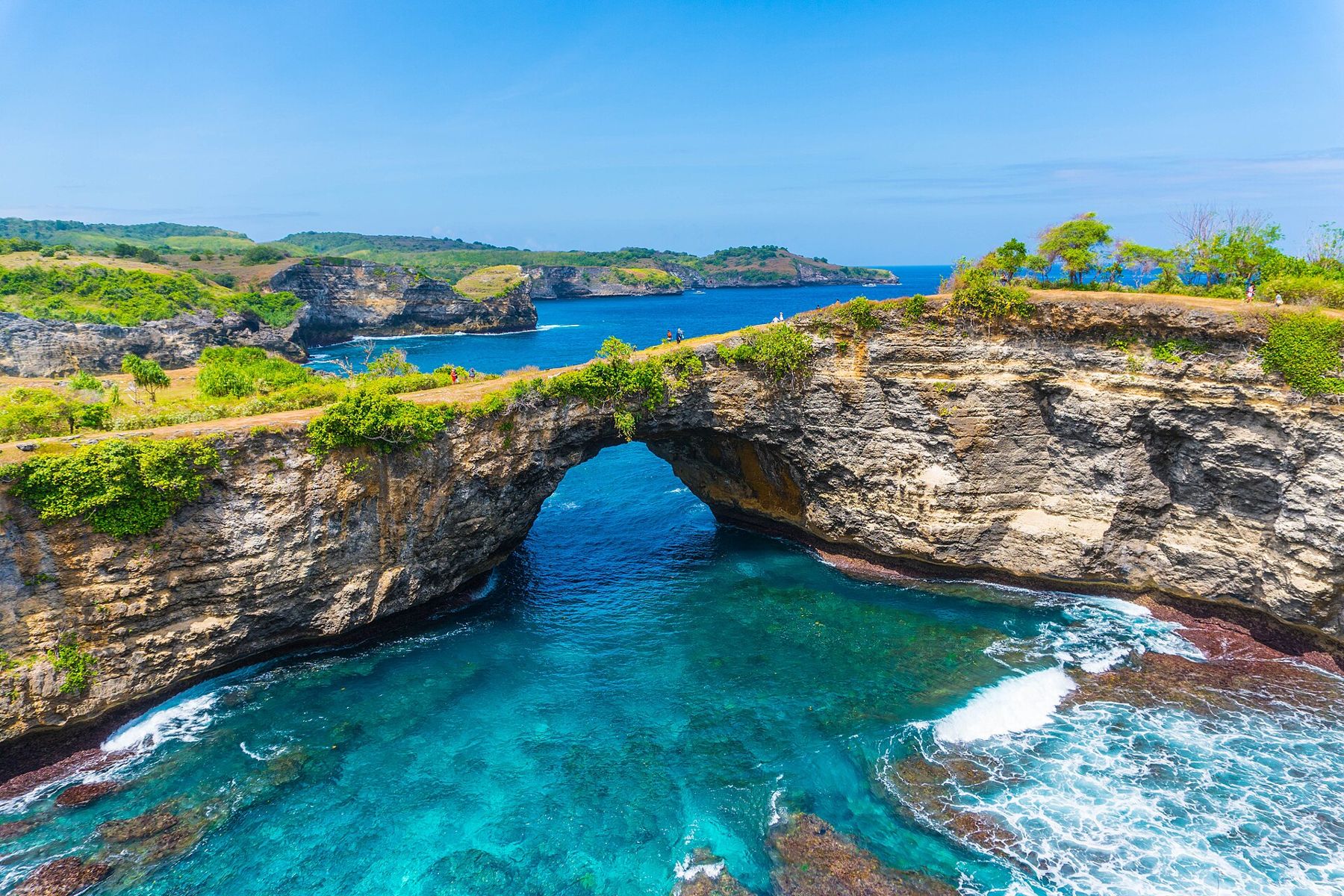
On the west coast, Broken Beach is a round cove where the sea flows in under a natural rock arch. Close by, Angel's Billabong is a rock pool on the shore that looks calm at low tide. Waves can break over it without warning, and people have been swept off the rocks. Look from the safe side, and do not swim there unless conditions are clearly calm and local people say it is safe.
Swimming with manta rays
The waters off the south and west of the island are known for reef manta rays, which gather at cleaning stations where small fish pick parasites from their skin. Boat trips take snorkellers and divers to these sites, and the mantas are seen through much of the year, though sightings are never guaranteed.
To swim with them well:
- Keep a few metres away and never touch or chase them.
- Do not dive down on top of them; let them come to you.
- Listen to the boat crew about currents, which can be strong here, and stay near the boat.
- Choose operators that limit the number of swimmers in the water.
The sea around Penida can be cooler than many expect, and currents in the strait are powerful. Only snorkel or dive with experienced crews, and never swim alone from unfamiliar beaches.
The island's temples
Nusa Penida holds important places for Balinese Hindus. Pura Dalem Ped, near the north coast, draws pilgrims from across Bali, and Goa Giri Putri is a temple inside a large cave, entered through a narrow opening in the hillside. Dress as for any temple, with sarong and sash, and follow any instructions at the entrance. You may also meet village ceremonies, including cremations, which are family and community events. Watch, if at all, from a respectful distance and ask before taking photographs. The temple etiquette notes are a useful primer.
A slower way to see it
A day trip from Bali usually means a rushed loop of viewpoints in the heat, sharing each one with hundreds of others. Two or three nights changes everything. You can be at one viewpoint at first light, spend the late morning on a boat or in the water, rest through the afternoon, and watch the sun go down over the strait in a quiet spot.
Check the current rules before you go. Visitors to Bali pay a tourist levy, and local charges for the islands and individual sites are set and changed by the authorities. Carry cash, as cards are not always taken.
The people who took these pictures are thanked by name, with their licences, in Photographs and thanks.