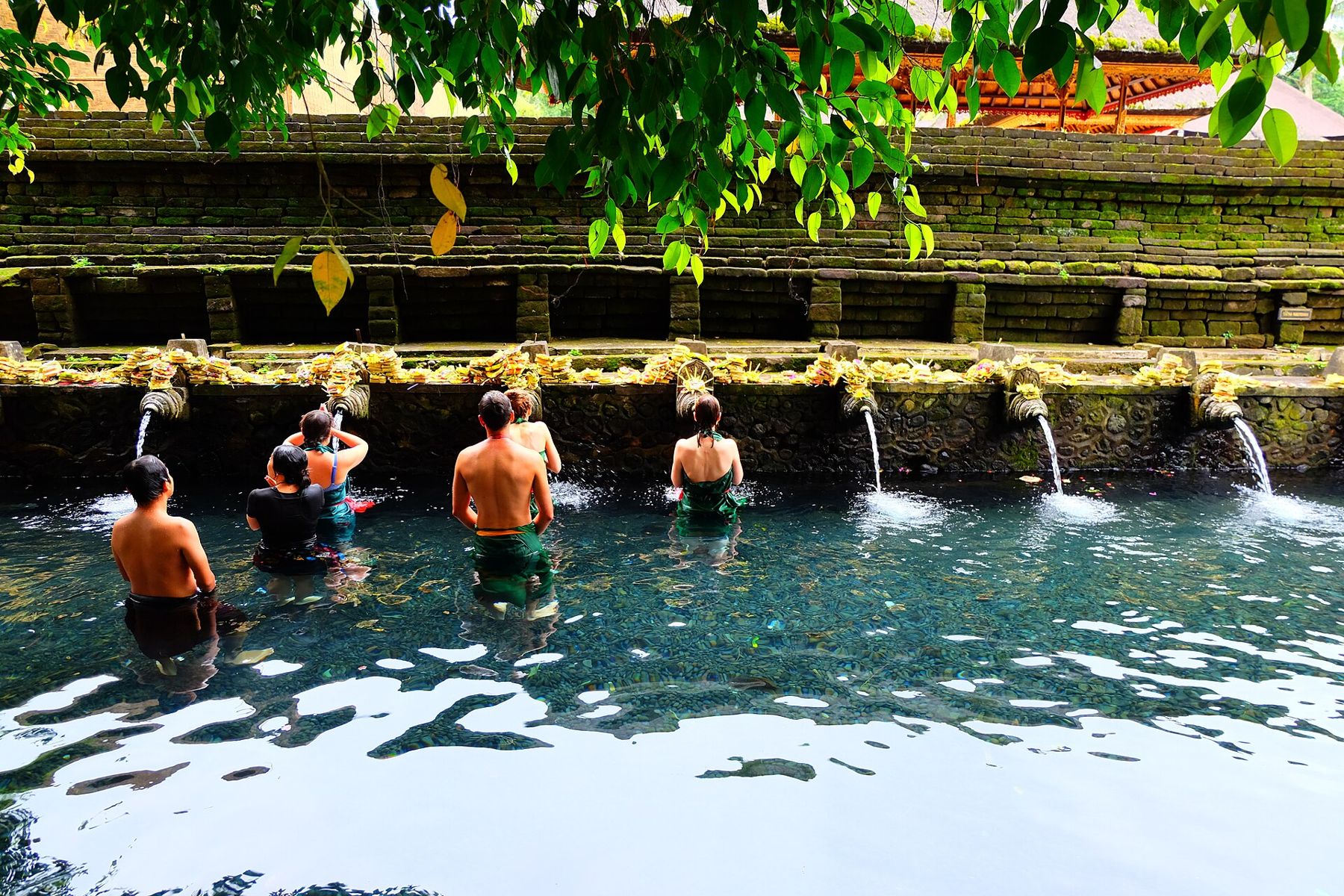
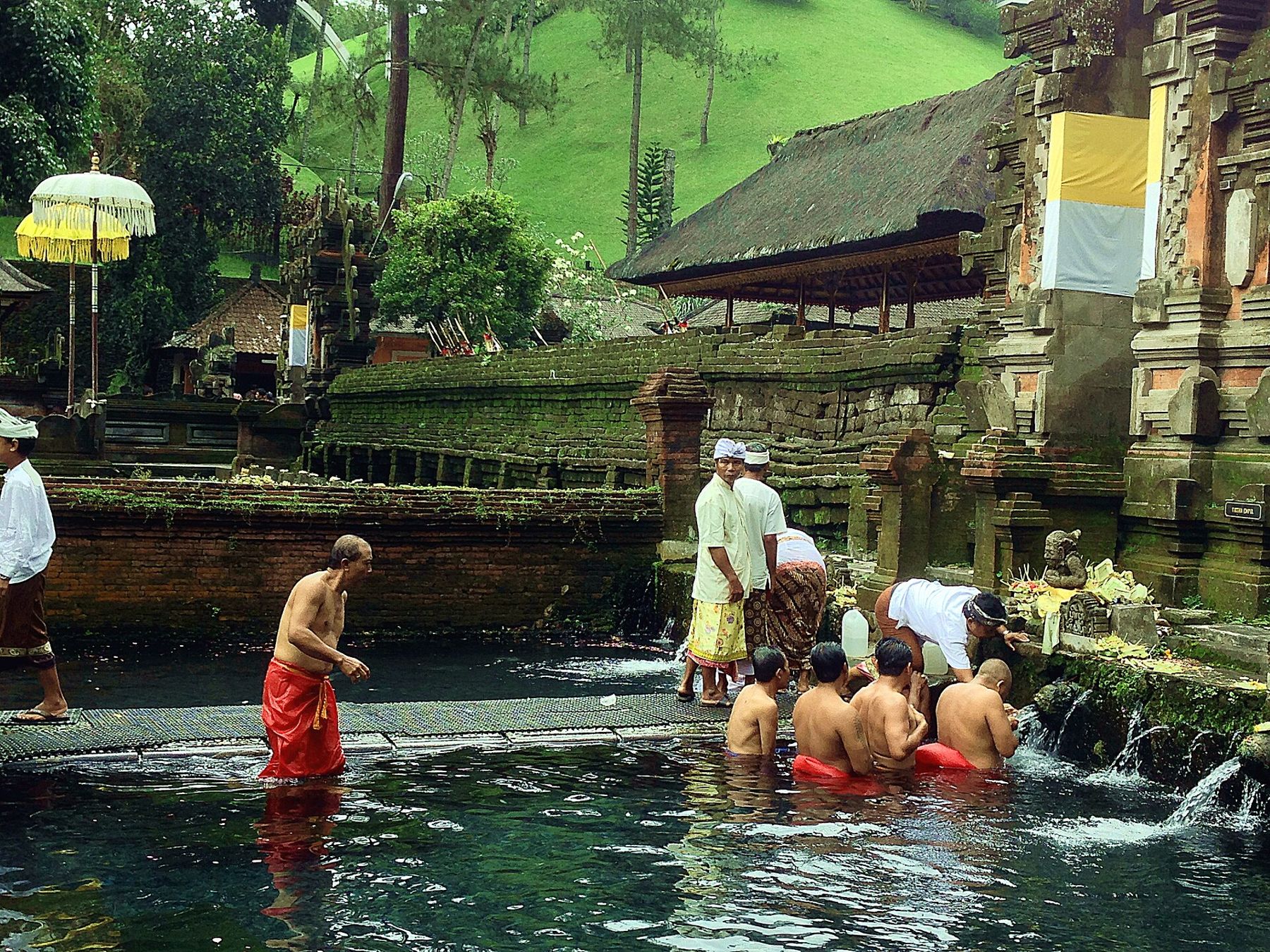
The water at Tirta Empul is so clear that you see the source before you hear it. In a walled pool inside the temple, the spring pushes up through dark volcanic sand, which shifts and bubbles in slow pulses. From there it is led into long stone basins and pours out of a row of carved spouts, where people stand waist-deep and bow their heads under the stream.
Pura Tirta Empul, in the village of Manukaya near Tampaksiring, is one of Bali's most important water temples. Its name means something like the temple of the bubbling spring. Balinese Hindus come here to be cleansed, to pray and to carry holy water home for ceremonies. Visitors can join them, and many do. The point is to come as a guest at a living temple, not as a spectator at a show.
A spring with a long history
The temple is traditionally dated to the tenth century, and the spring at its heart is older than any building. A well-known Balinese story tells that the god Indra struck the earth here to release a spring of immortal water, which revived his army after it was poisoned by the demon king Mayadenawa. The tale is told at festivals and in dance, and it explains why this water is believed to heal and purify.
The temple lies in the valley of the Pakerisan river, a landscape full of ancient sites. Nearby Gunung Kawi has royal memorials cut into the cliffs, and the whole watershed is part of the cultural landscape UNESCO listed for the subak, the shared irrigation system of the island. The piece on the subak and its water temples explains how springs like this one connect to the rice fields downstream.
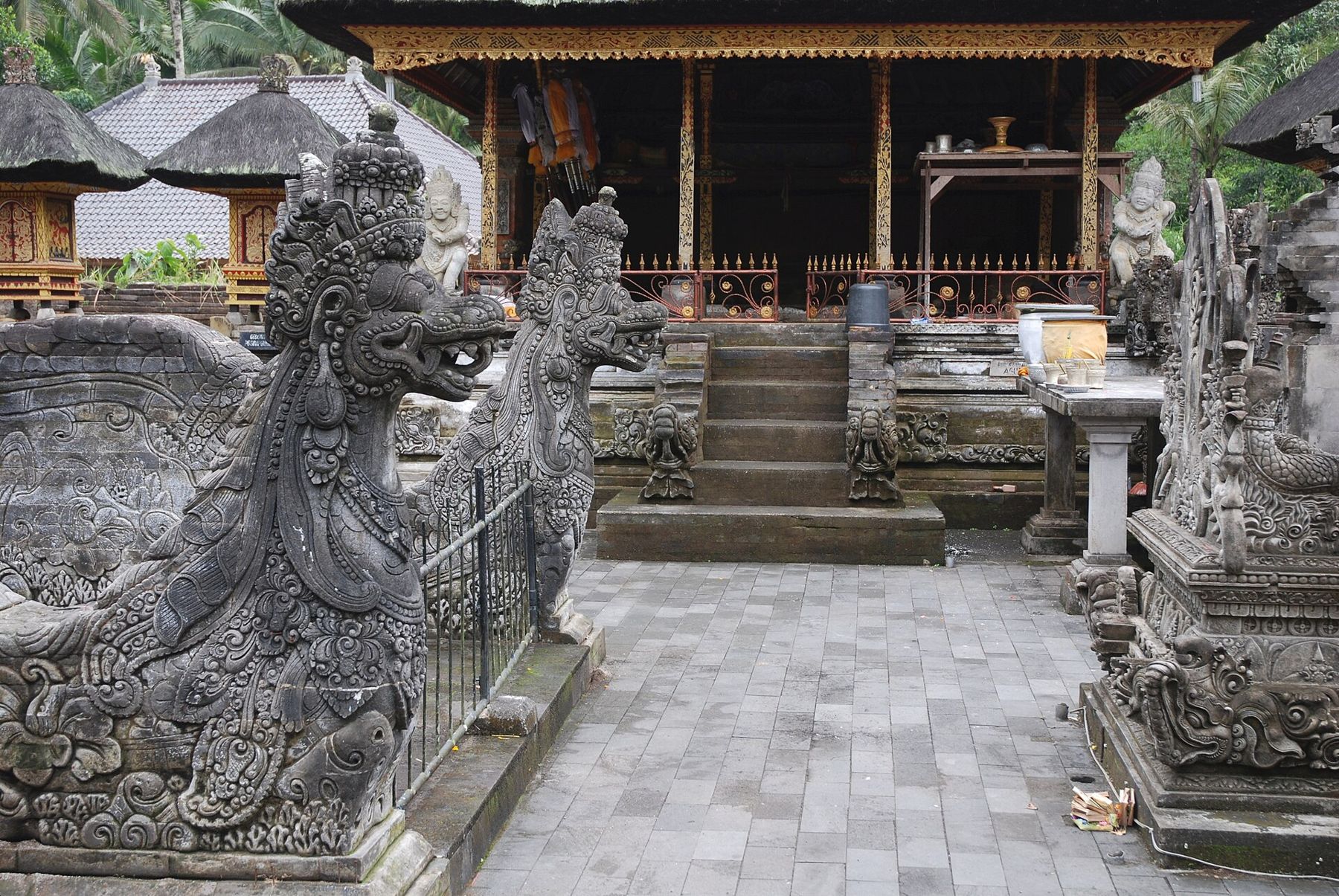
On the hill above the temple stands a presidential palace built in the years after Indonesian independence. You see its grounds from the temple courtyards, a reminder of how highly this spring has long been regarded.
What melukat means
The purification ritual is called melukat. It is a cleansing of body and spirit, sought before important life events, after illness or misfortune, on auspicious days, or simply as part of a devout life. For Balinese worshippers it is accompanied by prayer and offerings, and often guided by a temple priest.
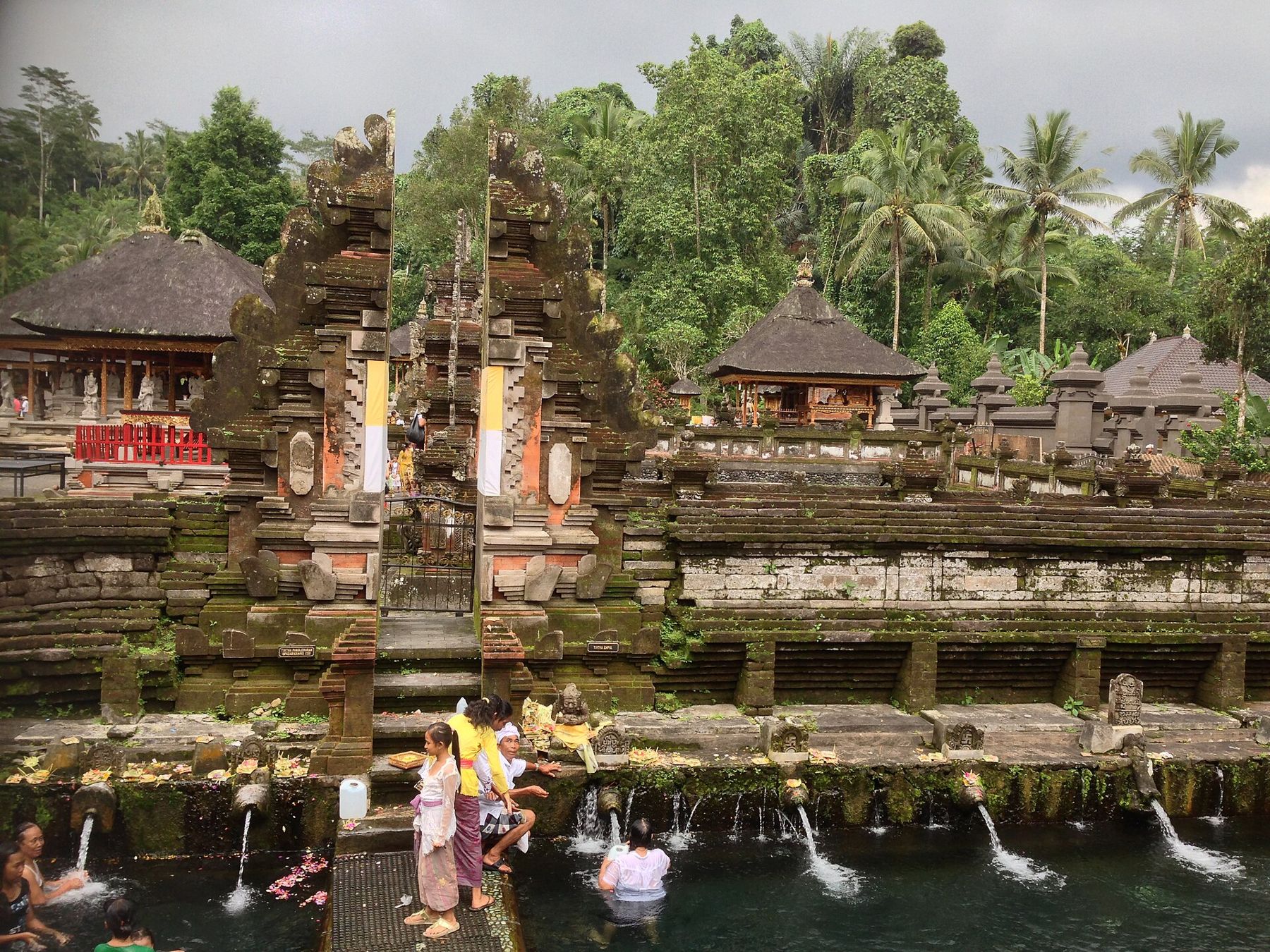
Visitors who take part are joining something sacred. That does not mean you need to be Hindu, but it does mean the bath is not a swim. Come with a quiet mind, a clear intention and an awareness that the people beside you may be there for something important.
Come with a quiet mind, a clear intention and an awareness that the people beside you may be there for something important.
How to take part respectfully
At the entrance, everyone needs a sarong and sash, which are usually provided or available to hire. To enter the water you will need a separate bathing sarong worn over your clothing or swimwear; bare swimwear is not appropriate. Changing rooms and lockers are normally available. Arrangements and fees change, so check before you go.
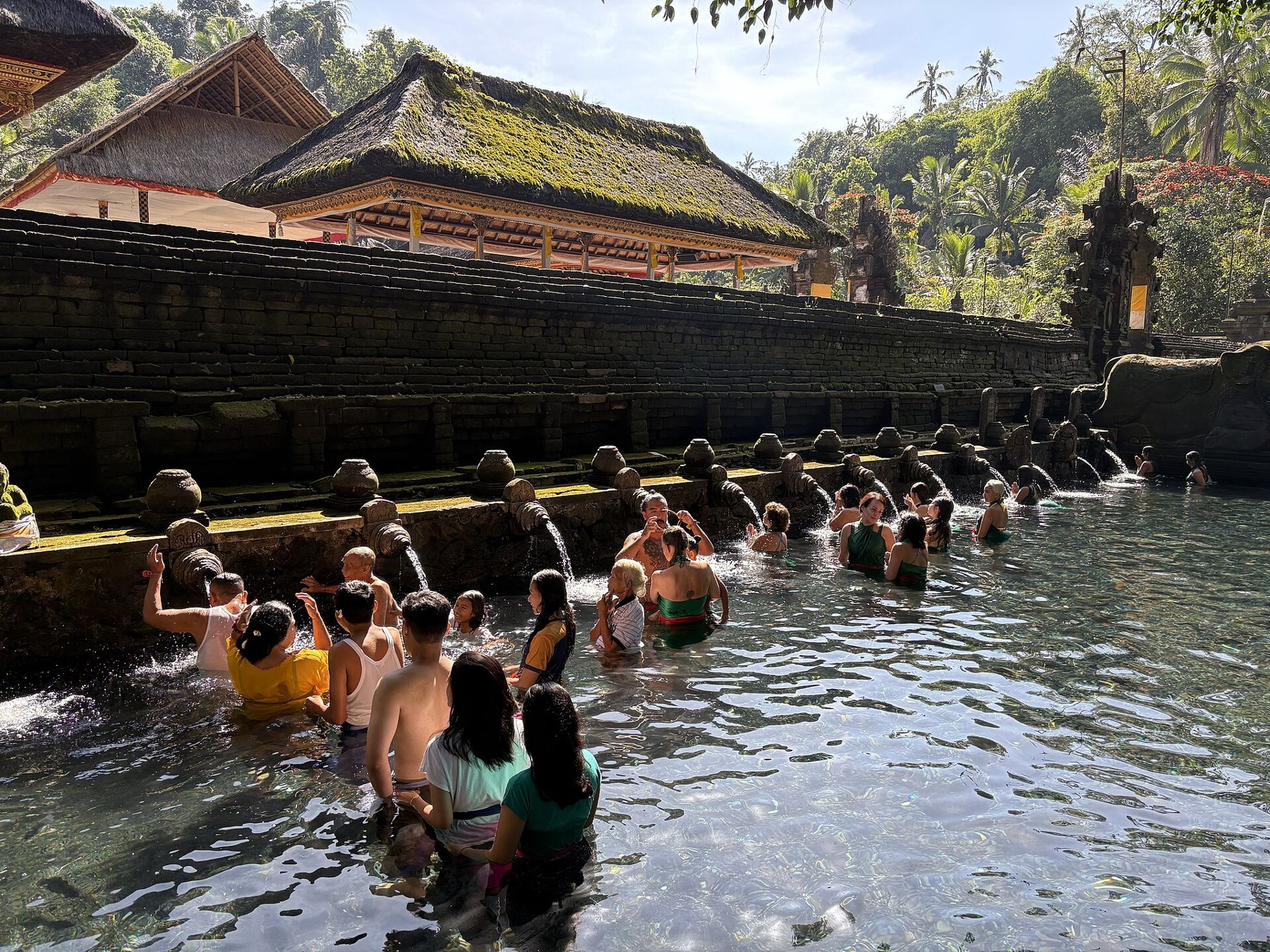
Before bathing, it is customary to make a small offering and to pray. Offerings can usually be bought near the entrance, and staff or local bathers will often show you what to do.
- Enter the pool quietly at the end where others begin.
- Stand before each spout, press your palms together and say a silent prayer.
- Bow your head beneath the water and let it run over you; many people also cup it to wash the face.
- Move along the row in order, waiting your turn without pushing.
- Pass by any spout that others pass by; some are kept for particular rites, such as cleansing connected with death.
If you are unsure at any point, watch the Balinese bathers and follow their lead, or ask a temple attendant. Do not splash, shout, pose for long photographs under the spouts, or let others photograph you as though the pool were a stage.
 Another courseTemple etiquette and what to wear
Customs at the temple
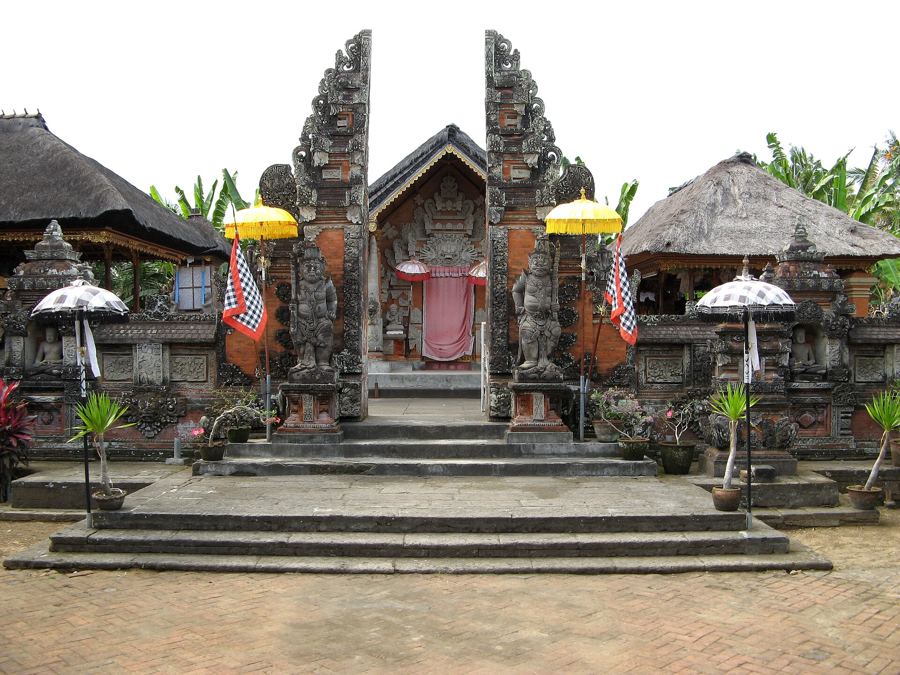
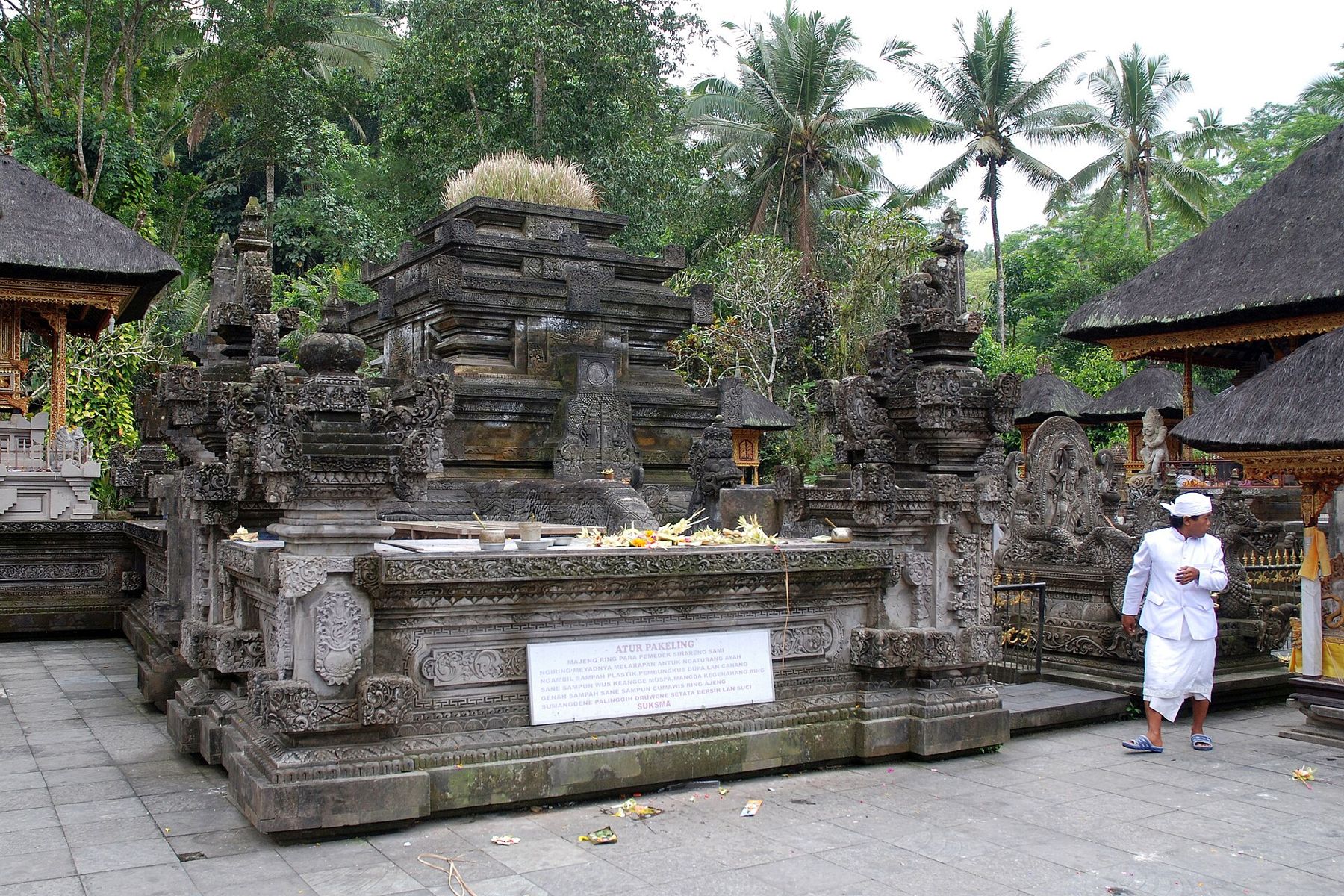
The general rules for Balinese temples apply here, and they are worth knowing before you arrive. Cover your shoulders and knees, wear the sarong and sash throughout, and speak quietly. Do not climb on walls or shrines, and never step on offerings placed on the ground. The guide to temple etiquette and what to wear covers these in more detail.
By Balinese custom, women who are menstruating do not enter temples, and this includes Tirta Empul and its pools. The custom concerns ritual purity rather than hygiene, and it is observed by Balinese women themselves. Visitors are asked to respect it in the same way. People with open, bleeding wounds and those in a recent period of mourning are also traditionally asked not to enter.
Some courtyards and shrines are reserved for worshippers, and you may find a rope, a closed gate or a polite sign. Take that as the answer. Photographs of people at prayer are best avoided altogether, and never use flash. If a ceremony is under way, step back to the edge of the courtyard, keep your voice low and let the priests and families move freely. A small donation in the box at the entrance, given quietly, is always welcome.
When to go, and what to bring
Go early. The temple opens in the morning, and the first hour is the calmest: the water is cold, the light is soft and the pools are not yet crowded. By late morning, tour groups arrive and the line along the spouts grows long. Full moon and other holy days bring many Balinese worshippers, which is moving to see but busy; on those days, consider watching rather than bathing, and leave room for those who have come to pray.
Tirta Empul is roughly forty minutes north-east of Ubud by road, depending on traffic. It pairs well with a slow visit to Gunung Kawi on the same morning, where a long flight of steps leads down to the river and the carved memorials; take the climb back up gently, especially in the heat. If you are staying near the rice fields, the piece on Ubud's rice terraces suggests a quiet start to the day.
- A sarong and sash of your own, though they are usually available on site.
- A complete change of clothes and a small towel.
- A bag for wet things.
- Small notes for donations, offerings and lockers.
Afterwards, before you change and leave, walk back to the spring pool and stand for a moment by the wall. Watch the sand stir as the water rises. It has been rising here for longer than anyone remembers, and it will be rising after you go.
The people who took these pictures are thanked by name, with their licences, in Photographs and thanks.